
Every spring, over a million people travel to Antigua for Semana Santa, or Holy Week. The cobblestoned streets of Guatemala’s former capital are filled with visitors – whether they are devout Catholics participating in the processions, locals there to see the floats, or tourists drawn by the spectacle.
During Semana Santa, andas, or “floats” with statues of Jesus Christ and the Virgin Mary are carried through the cobblestoned streets of Antigua. Each float with Jesus is carried by cucuruchos or “bearers”. The larger floats that I saw during Semana Santa required over 100 cucuruchos to carry, dressed in purple robes with white waistbands. The floats with the Virgin Mary are often carried by women dressed in all black. Weighing at up to 7,000 pounds each, the wooden floats sway from side-to-side with each step the carriers take.

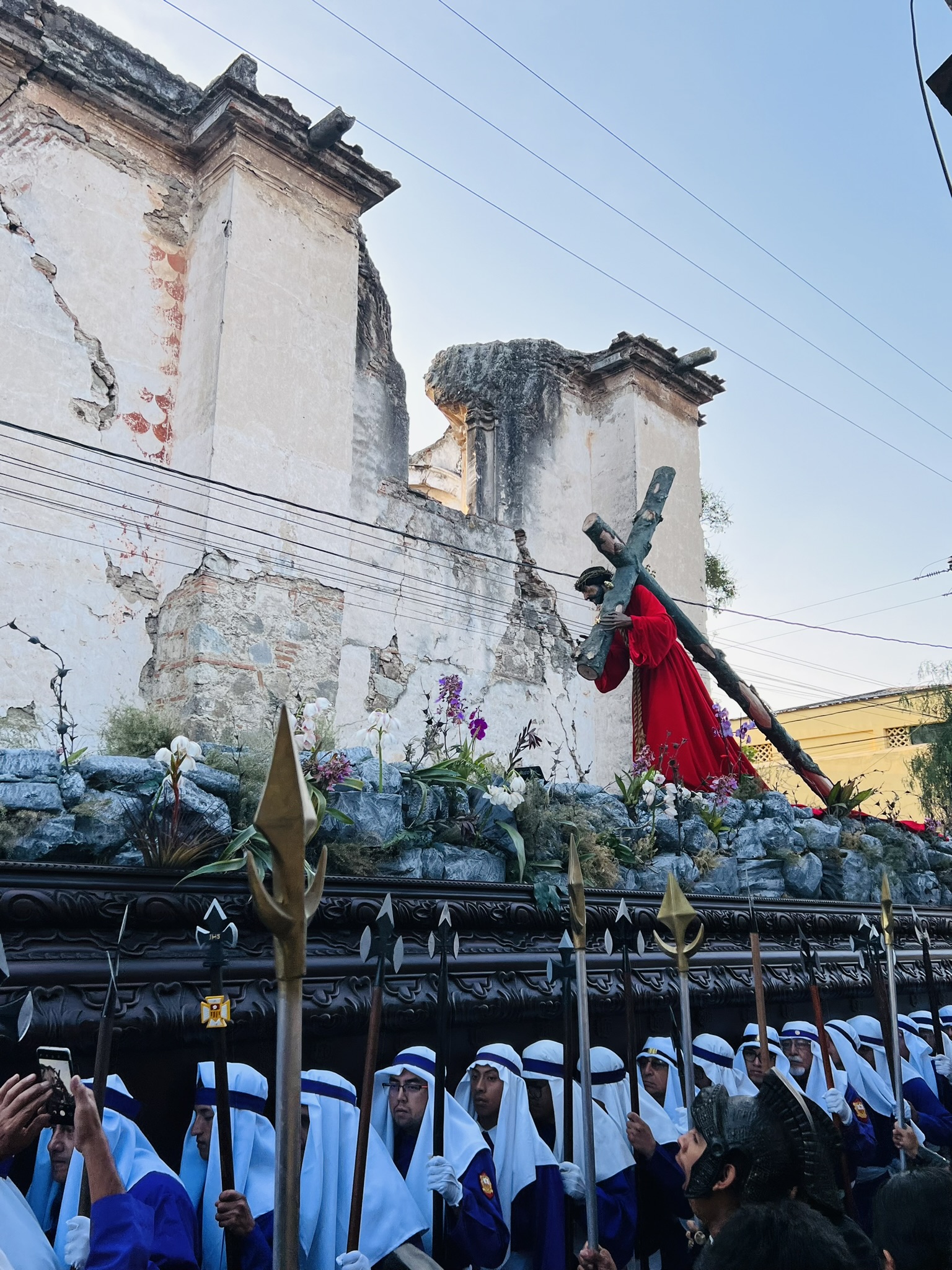
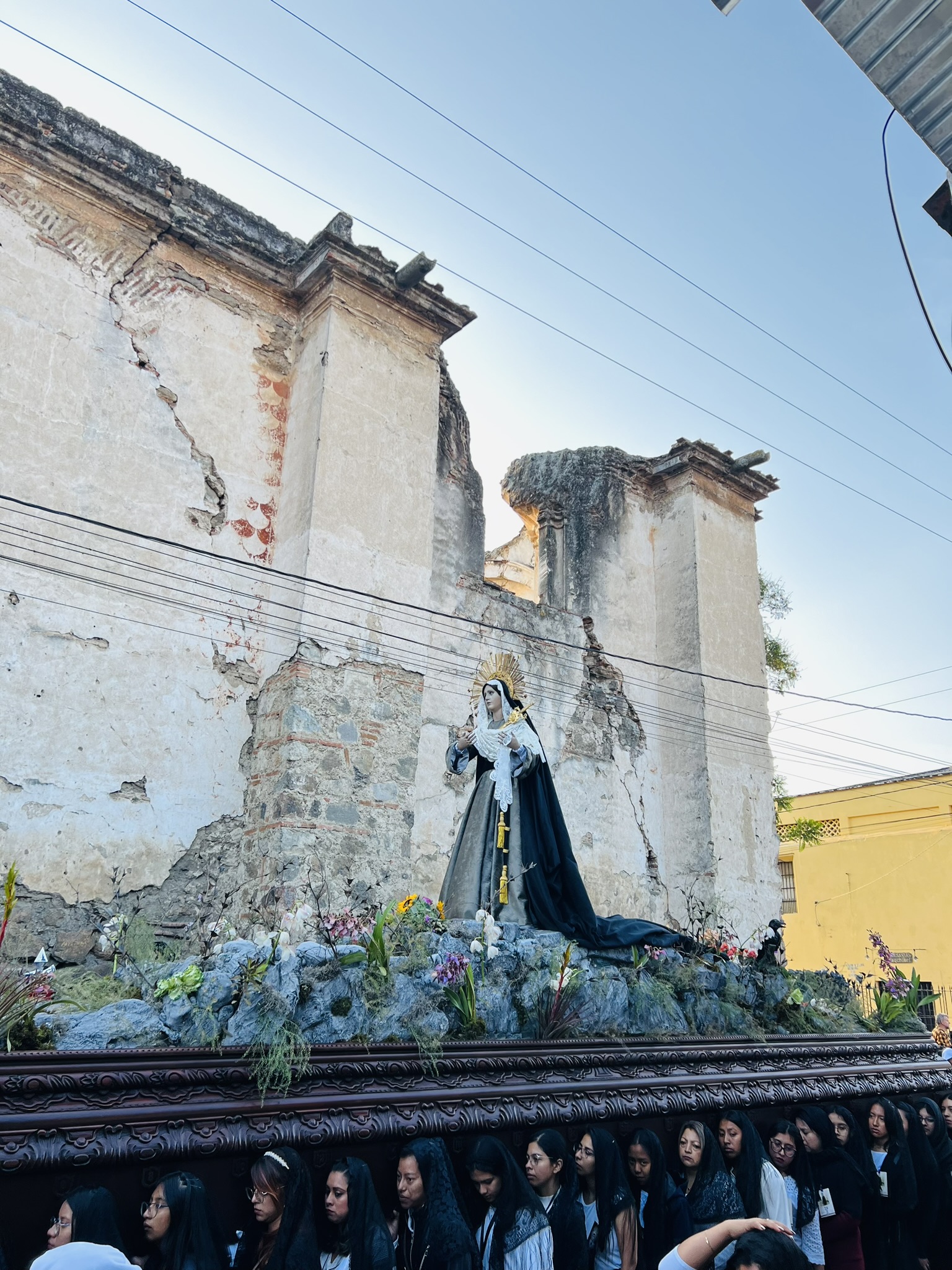
Float carrying originated in the 1500s as penance, but it has since evolved to become an honor and a privilege to be able to participate. I’ve been told that the “drop” to get passes to be one of the bearers is a big occasion every year and is often considered a generational right-of-passage within families.
Processions start on Holy Thursday evening, where they will continue well into the early morning. The processions run for roughly 12 hours, though some can take up to 18 hours, through various pre-set routes. Each route starts and ends at the respective Church that will bless the floats as they complete their procession.
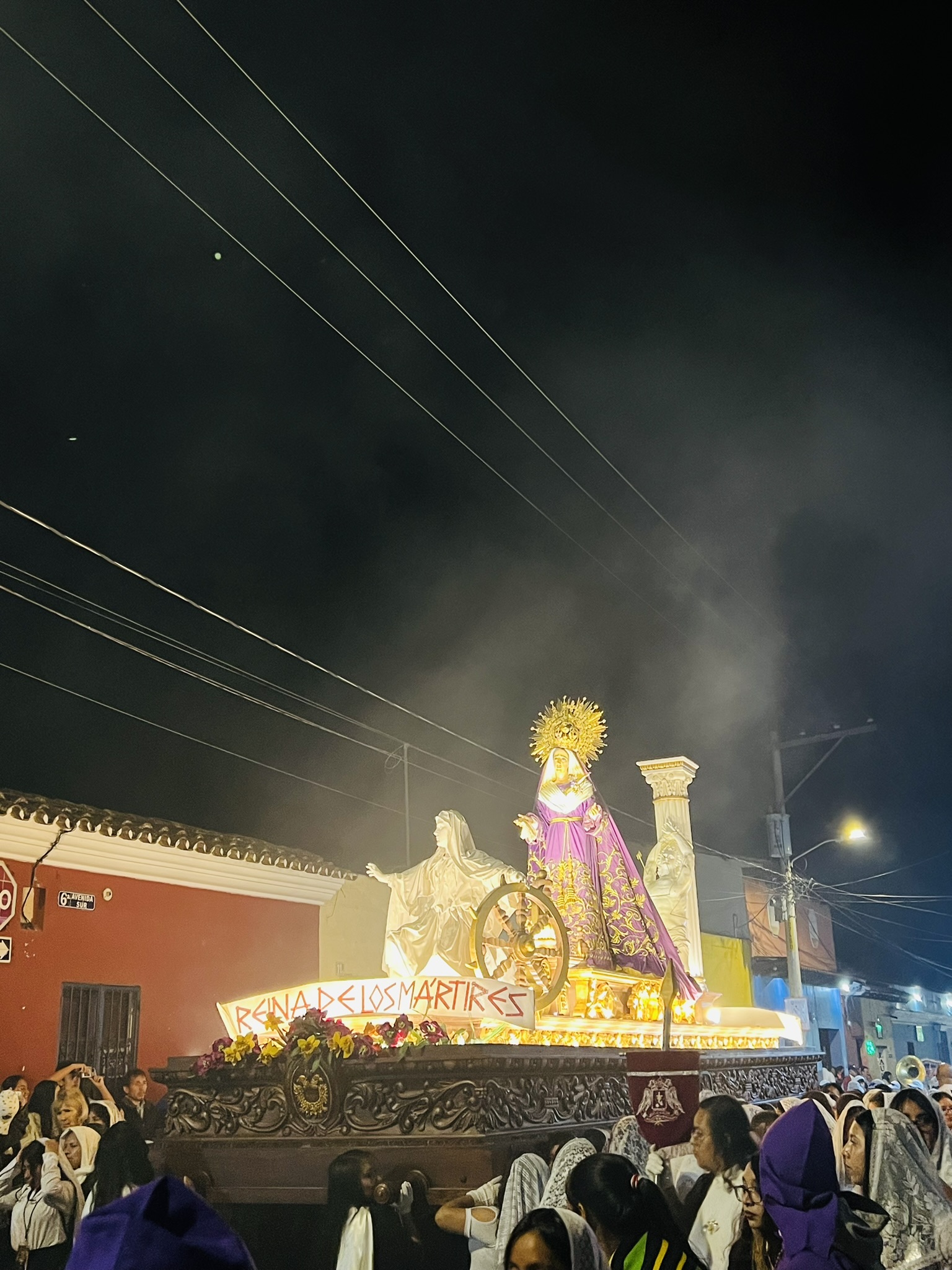
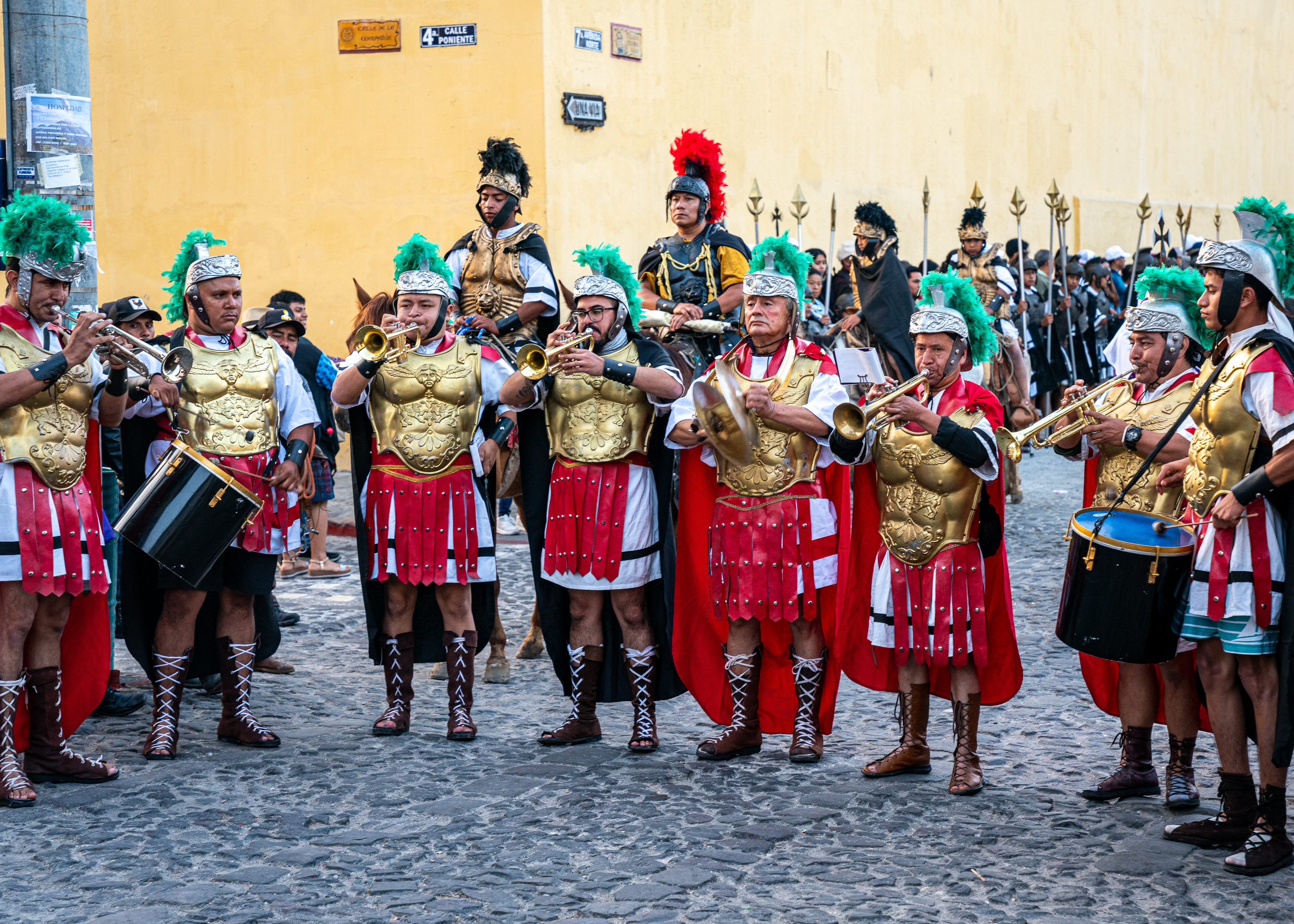
On Good Friday, the early morning processions are led by Roman “soldiers” dressed in red and gold, followed by cucuruchos dressed in purple with the floats. After 3pm, the cucuruchos change into black robes, to signify mourning. The evening processions on Good Friday are considered the most intense, with many of the floats depicting graphic images of Jesus dying on the cross.

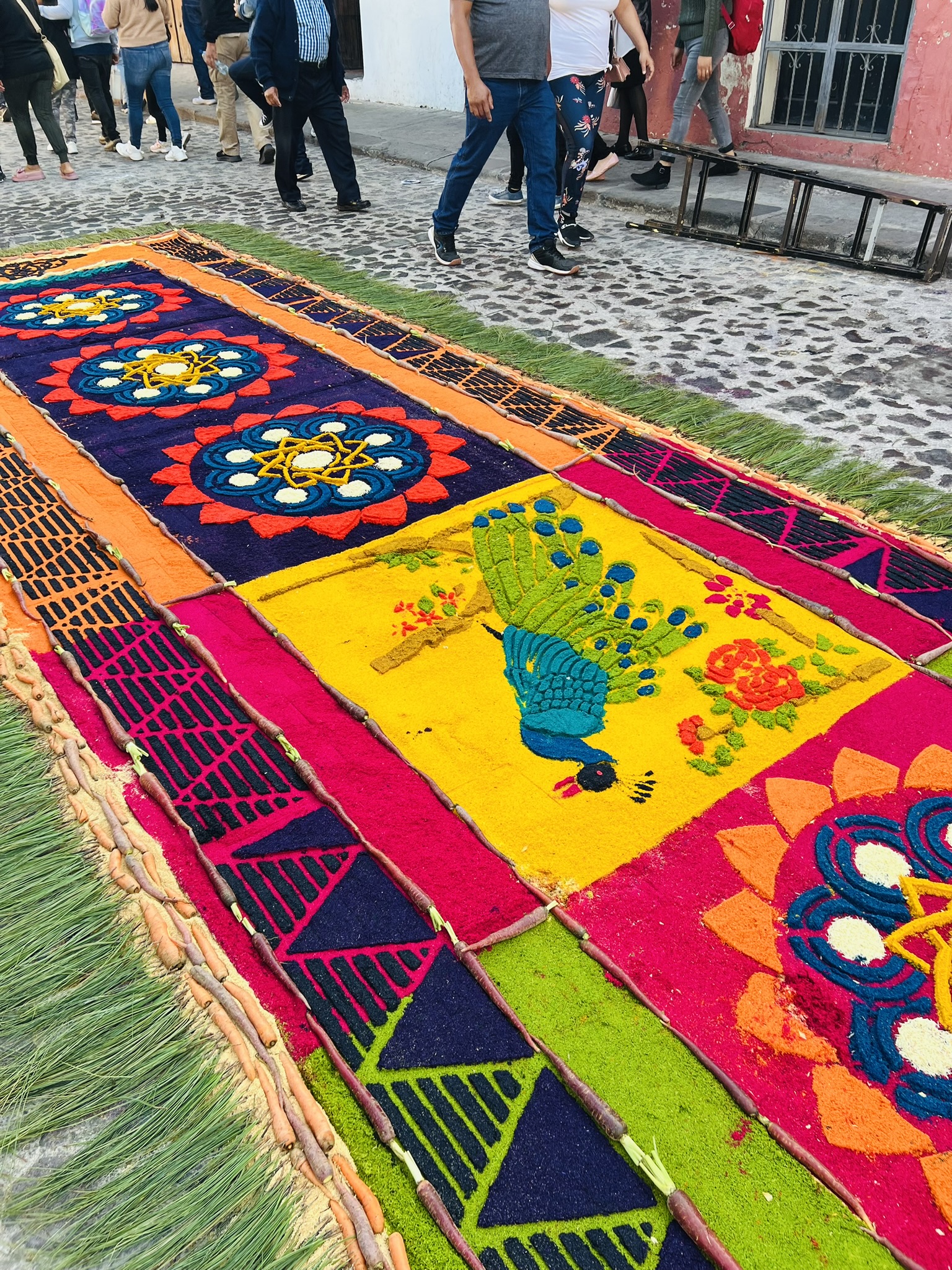
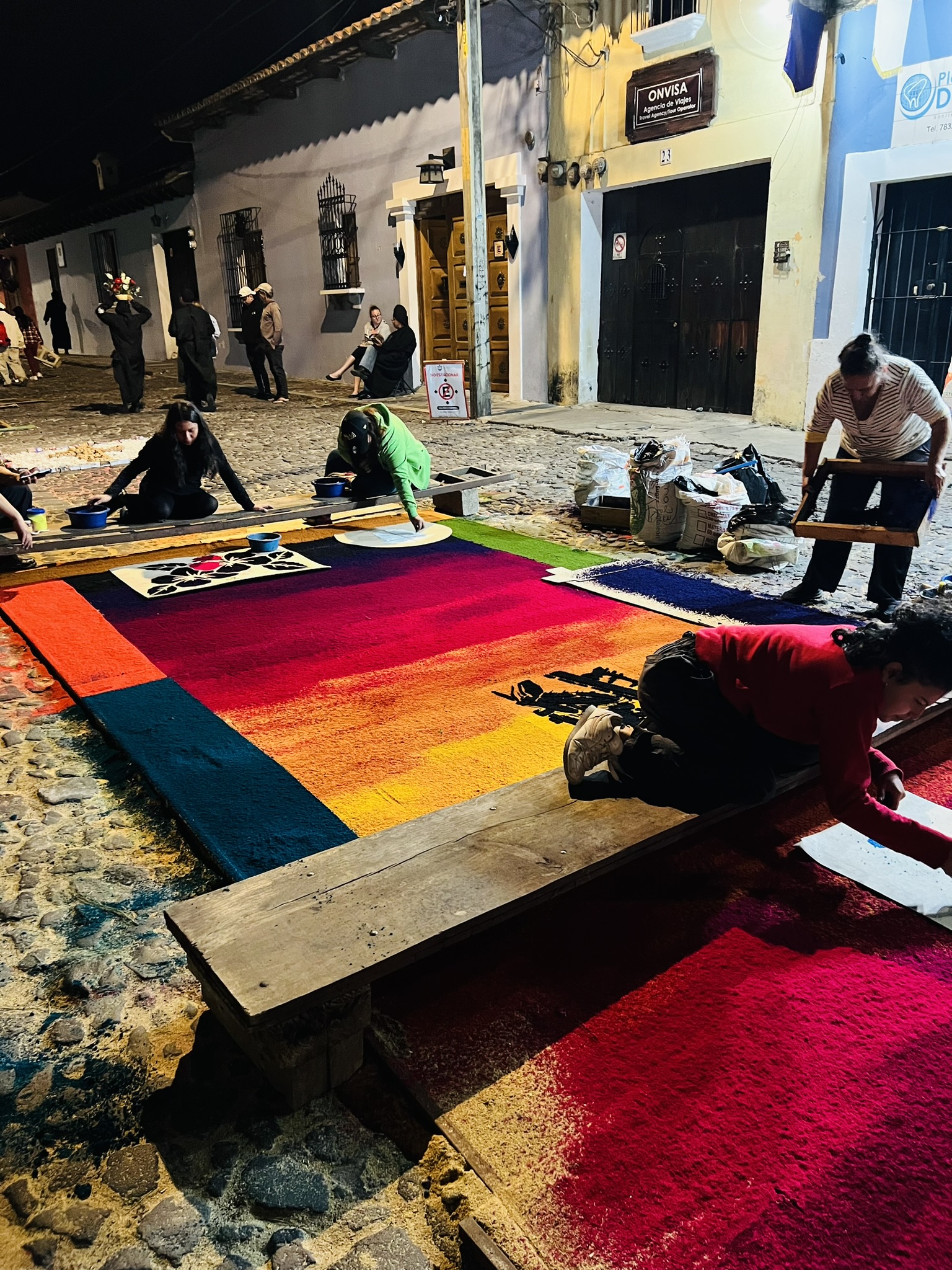
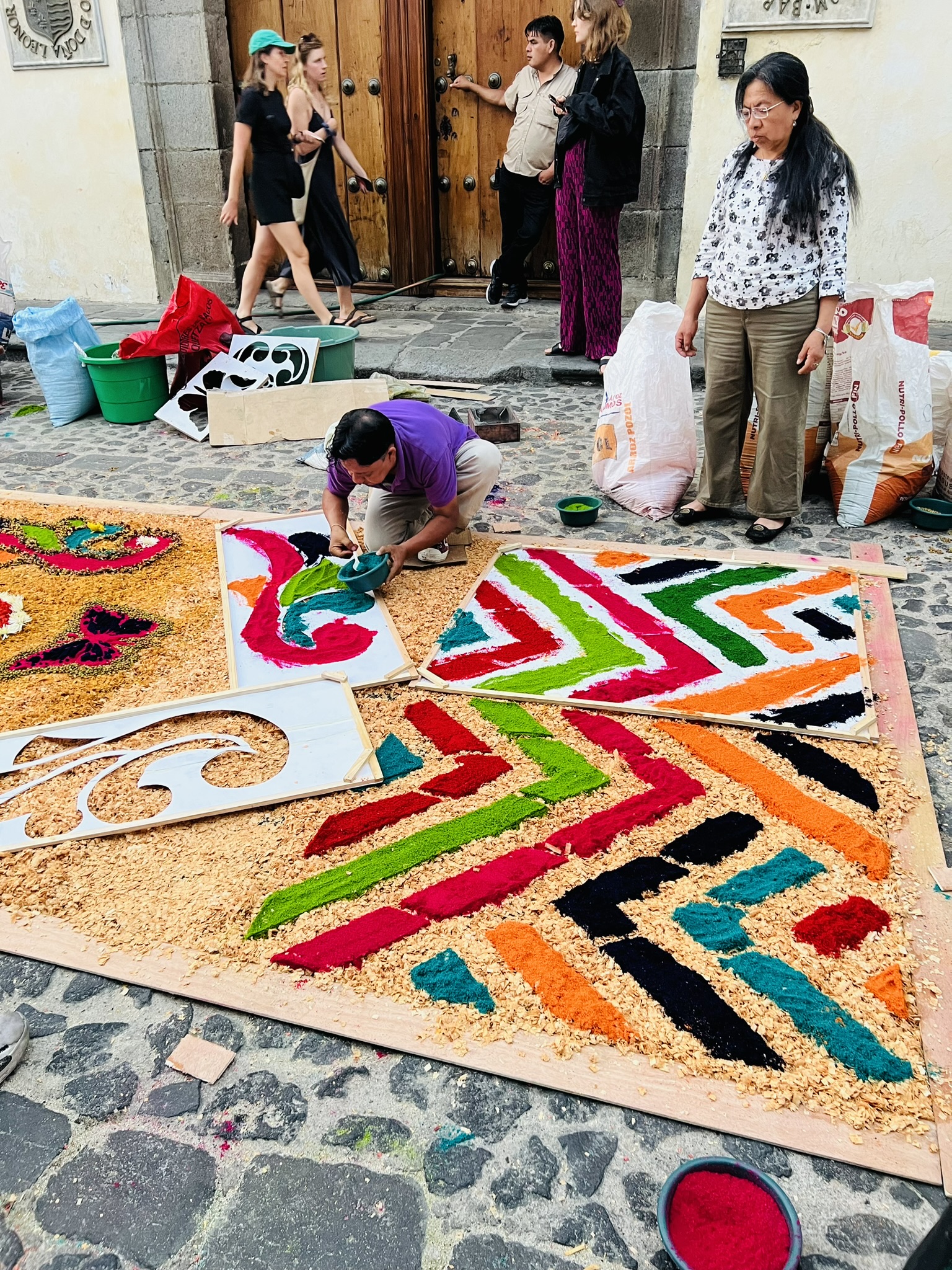
Aside from the processions, the streets of Antigua are also decorated and lined with beautiful alfombras, or carpets. The carpets are made by the families that live in Antigua and they’re often planned months in advance. The carpets are typically made with vibrantly colored sawdust, but I also saw one made with pistachio shells as well as other plants, flowers, and vegetables. The carpets are made just a few hours before the processions are set to make their way down the streets and are immediately cleaned up once the processions pass. I highly recommend visiting during the early morning hours to catch the beautiful carpets in full glory before the processions pass by.



I’ve been to Antigua two times before – in fact, I actually got married there! But I have never seen the town so full and so vibrant as during Semana Santa. As someone who grew up in the Catholic Church, I was used to the themes surrounding Holy Week and Easter. But I found myself awed by the devotion and dedication that the bearers have during Semana Santa in Antigua.
 cookiesandnoodles
I’d read several articles about Antigua, but never about Semana Santa. Antigua is a city that I wasn’t able to visit on my trip to Guatemala, but which I’d like to see one day.