München, or Munich, as we call it, is the capital of Bavaria, Germany, and one of the country’s most vibrant and historic cities. The name München comes from the German word, “Mönche”, or monks, because monks lived nearby. Founded in 1158, it quickly became the seat of Bavarian dukes and kings until World War I brought the end of the Bavarian monarchy in 1918. During World War II, large parts of the city were destroyed by bombing. After the war, Munich was rebuilt. Today, it is a major center for technology, science, and education and is home base to international companies like BMW. Munich is perhaps most famously known for being home to the world-famous Oktoberfest, but there is actually so much to see and learn in the city.
After some research, I decided to base our grand Christmas market adventure in Munich, since a lot of the markets I was interested in were just a short train ride away. We did manage to spend 3 days exploring Munich, which felt like just the right amount to get a feel for the city. I definitely want to come back to spend a little more time there.
Day 1:
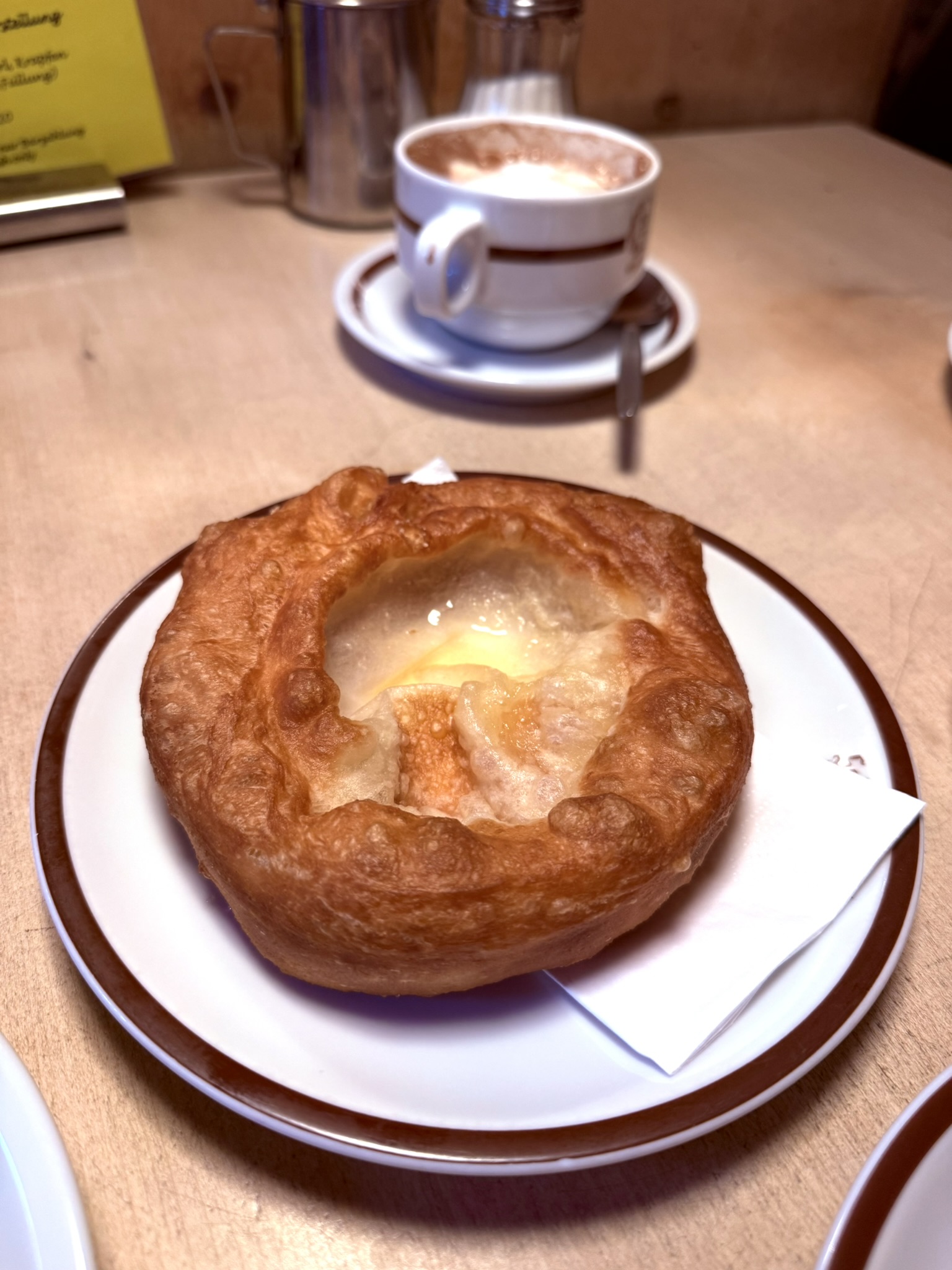
On your first day, start it off with breakfast at Schmalznudel Cafe Frischhut. Established in 1973 by the Frischhut family, the cafe specializes in schmalznudel, a popular Bavarian pastry. Schmalznudel is a fried dough delicacy dusted with sugar. Crispy on the outside and soft inside, it’s very similar to a Chinese youtiao.
After breakfast, stroll around Viktualienmarkt, an open-air food market located in the heart of the city’s historic Altstadt (Old Town). You can find fresh vegetables and fruits, cheeses and cured meats, and during the holidays, they also have a variety of themed wares. The stalls are open Monday–Saturday, generally from about 8:00 A.M. to 8:00 P.M.
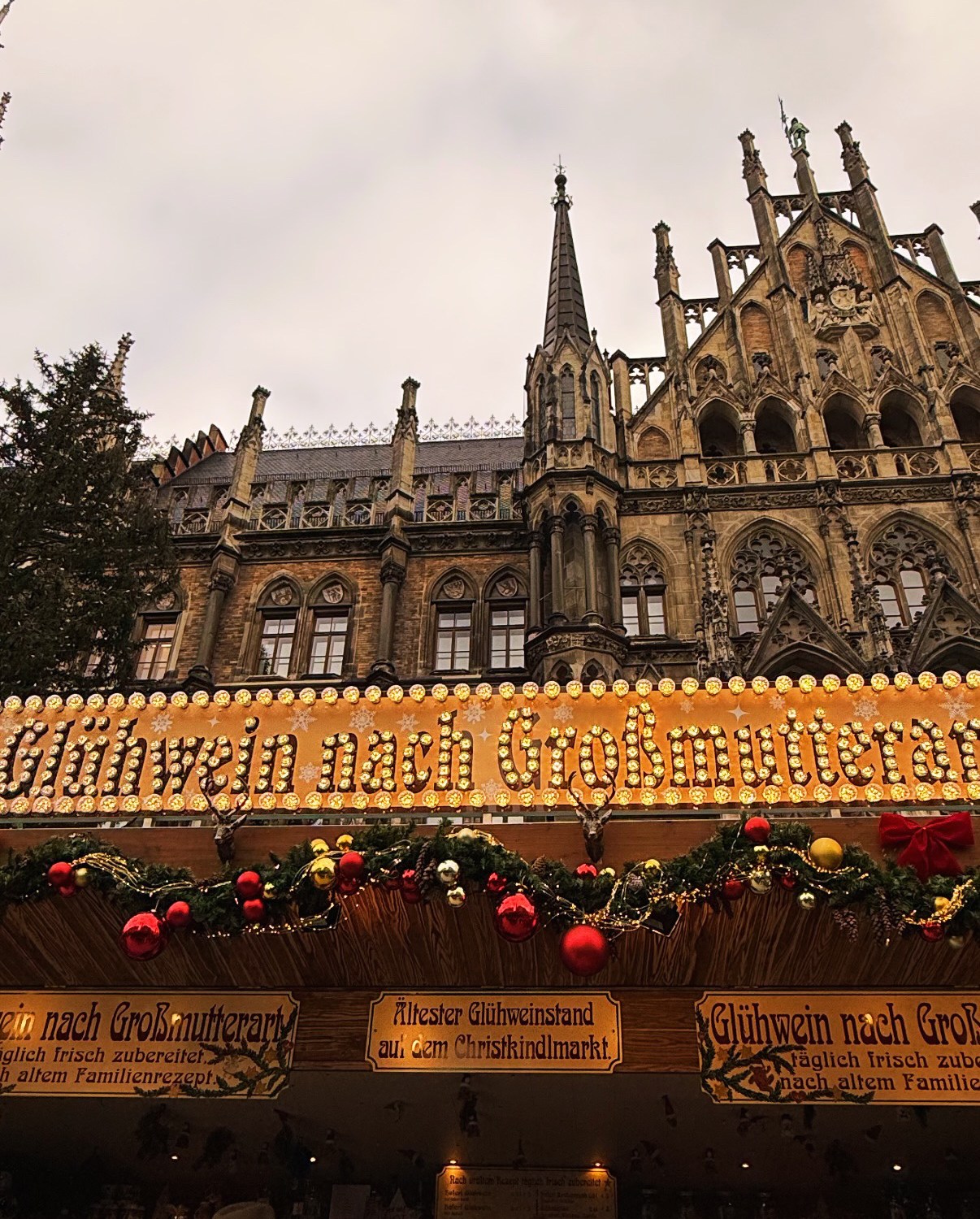
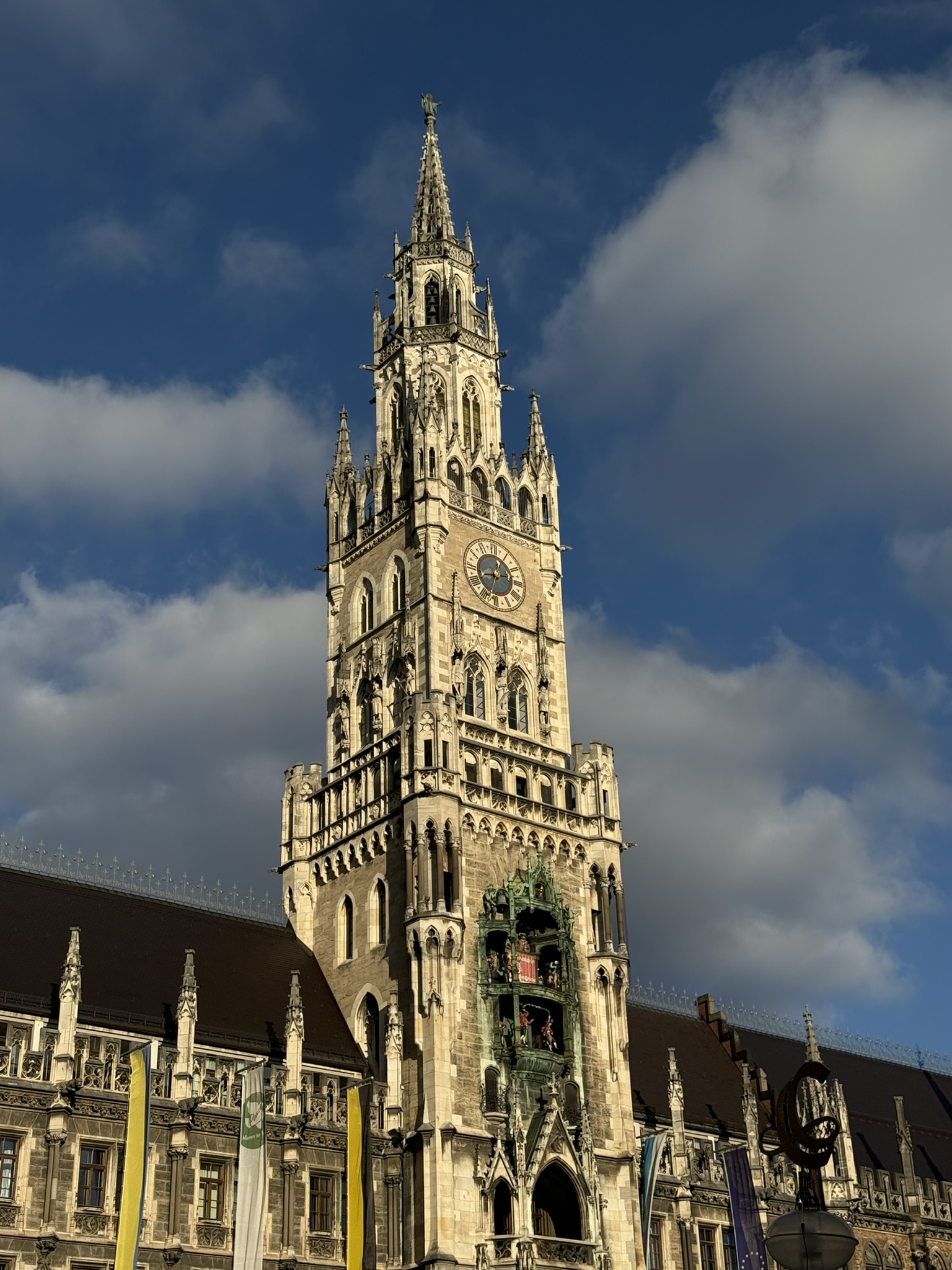
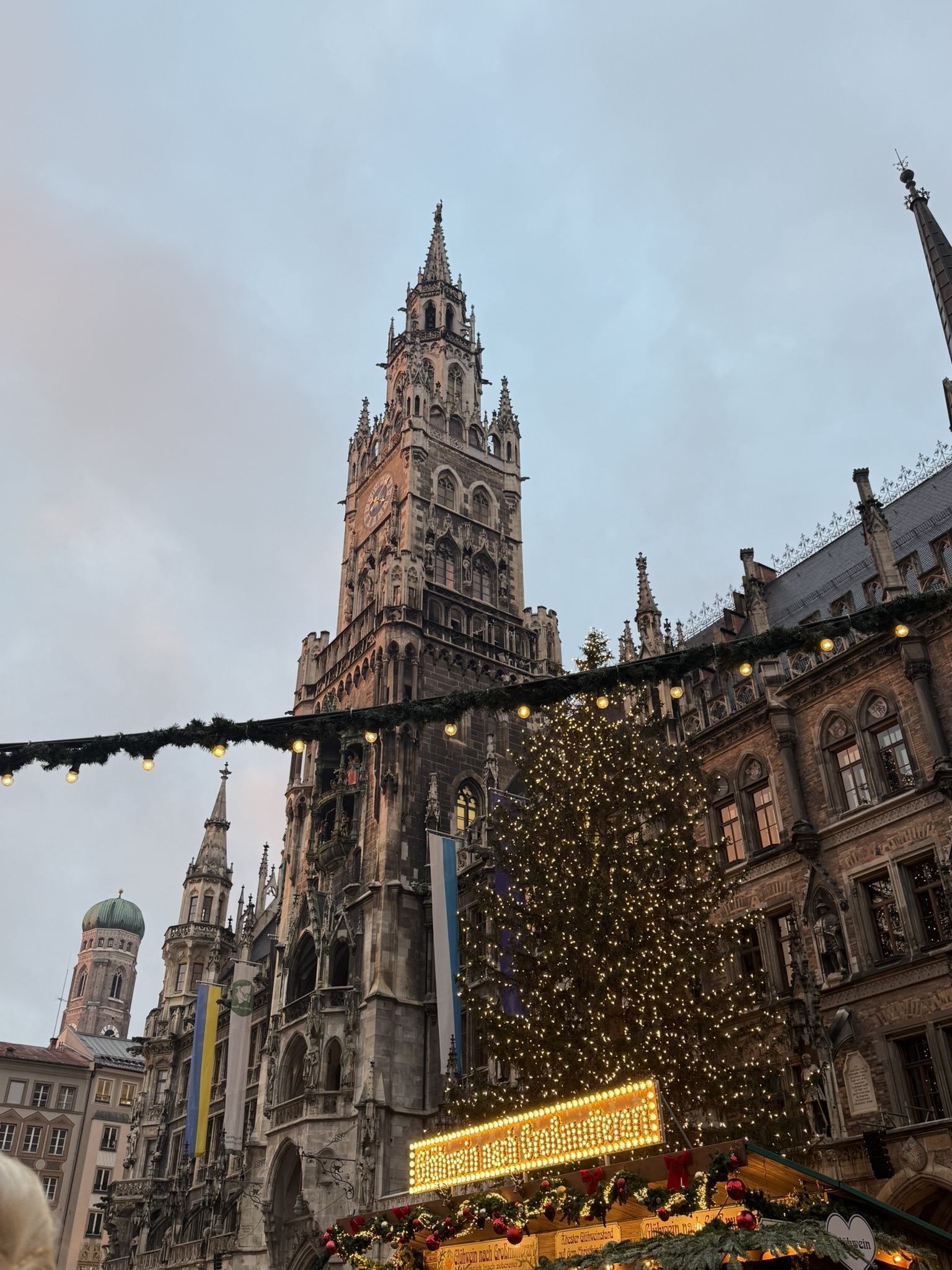
Close to Viktualienmarkt is Marienplatz, the central square of Munich. Here you’ll find Neus Rathaus (New Town Hall), an iconic building in the center of Marienplatz, created in Neo-Gothic style. There is a tower and viewing platform that offers great views of Marienplatz and the Old Town of Munich.
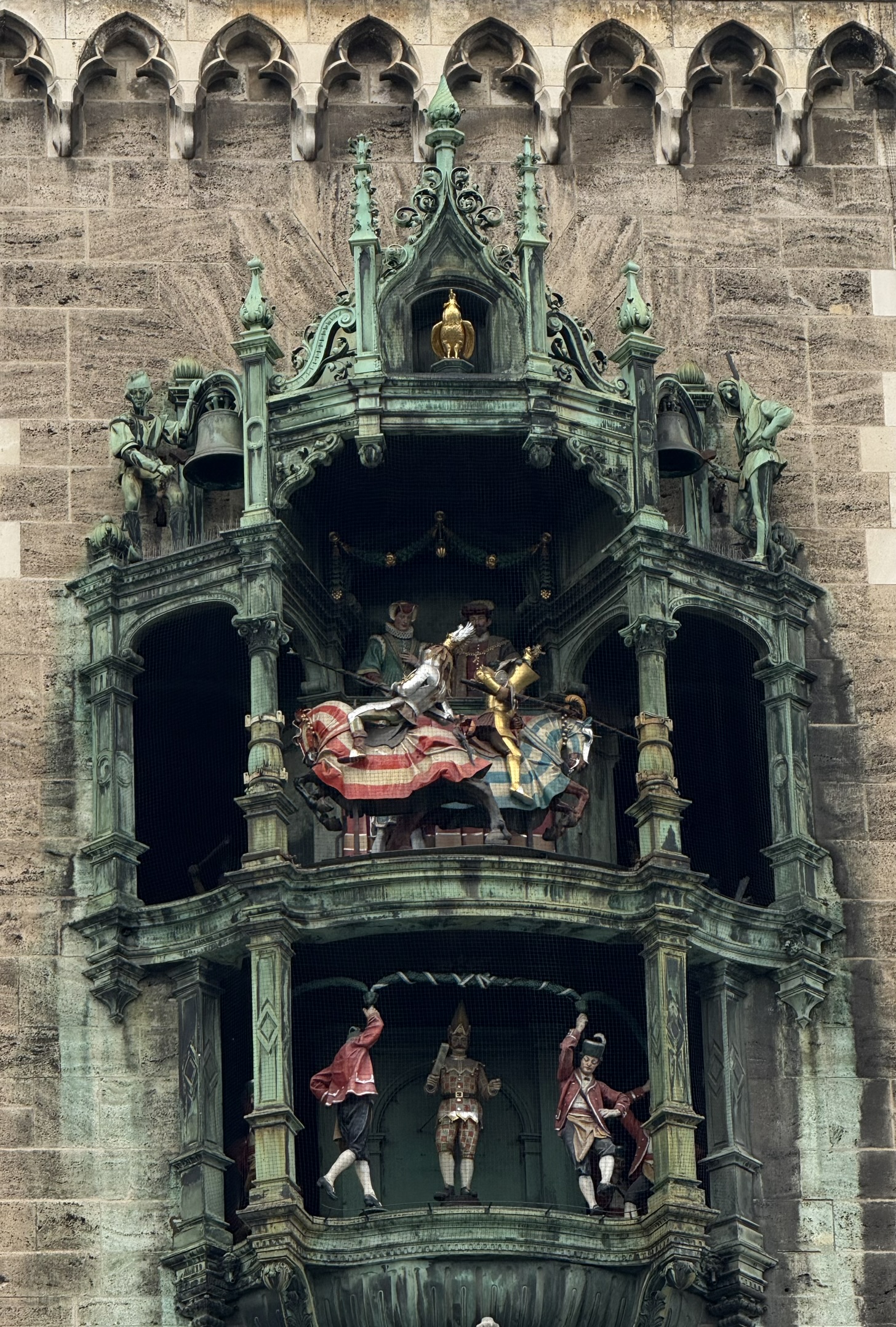
Neus Rathaus is home to the famous Glockenspiel Clocktower. The Clocktower plays daily at 11:00 p.m. and 12:00 p.m. With 43 bells and 32 life-size figures, it tells 2 stories within Munich’s history. The top level is a medieval joust that celebrates the wedding of Duke Wilhelm V of Bavaria. The bottom level is a Schäfflertanz, or Coopers’ Dance, that symbolizes joy and renewal after the1517 plague.
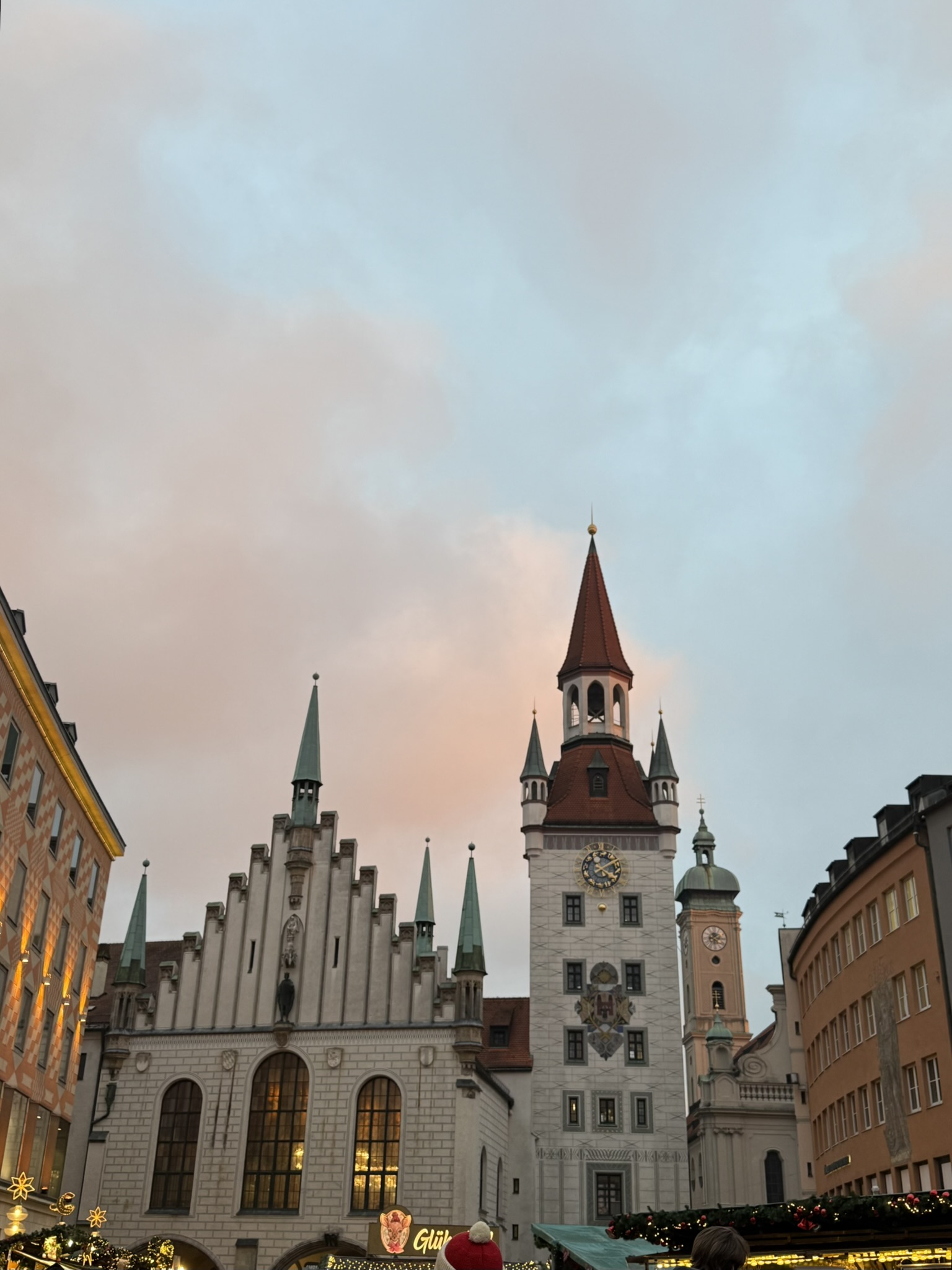
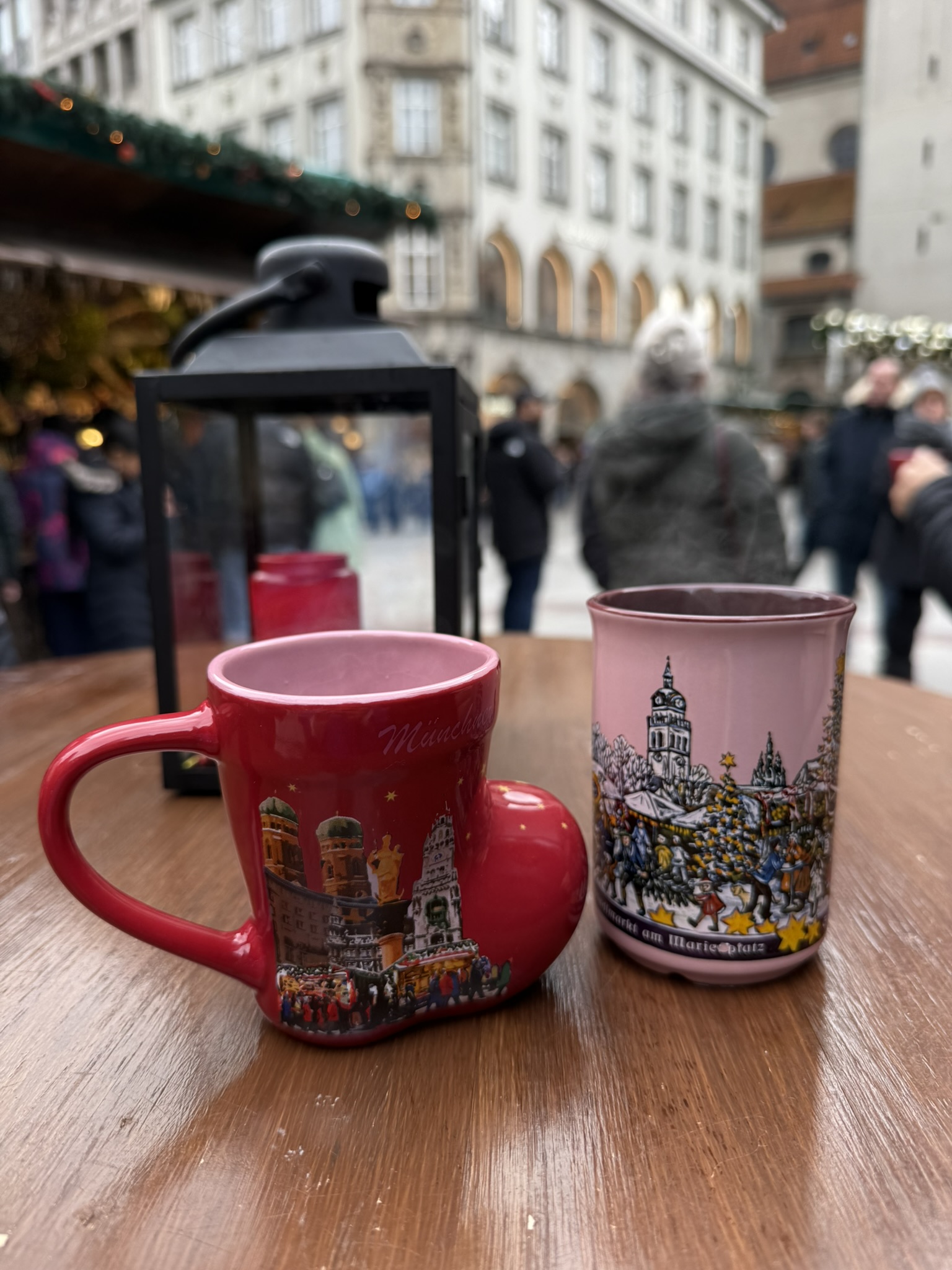
If you’re visiting during the Christmas season, Munich’s Christkindlmarkt is also located in Marienplatz. Christkindlmarkt on Marienplatz is Munich’s main Christmas market. It is usually open from late November until December 24. The market is filled with wooden stalls selling food, snacks, and Glühwein (mulled wine) and Kinderpunsch (non-alcoholic) in iconic mugs.
If you have some spare time left after the Christkindlmarkt or aren’t visiting during the Christmas season, I highly recommend the Munich Residenz. The Residenz is Germany’s largest city palace and has been the home of the Bavarian dukes, electors, and kings for over 400 years. Built and expanded over many centuries, the Munich Residenz features many art styles, including Renaissance, Baroque, Rococo, and Neoclassical. The Residenz features the Residenz Museum, the Treasury, and the Cuvilliés Theatre, a Rococo opera house
Day 2:
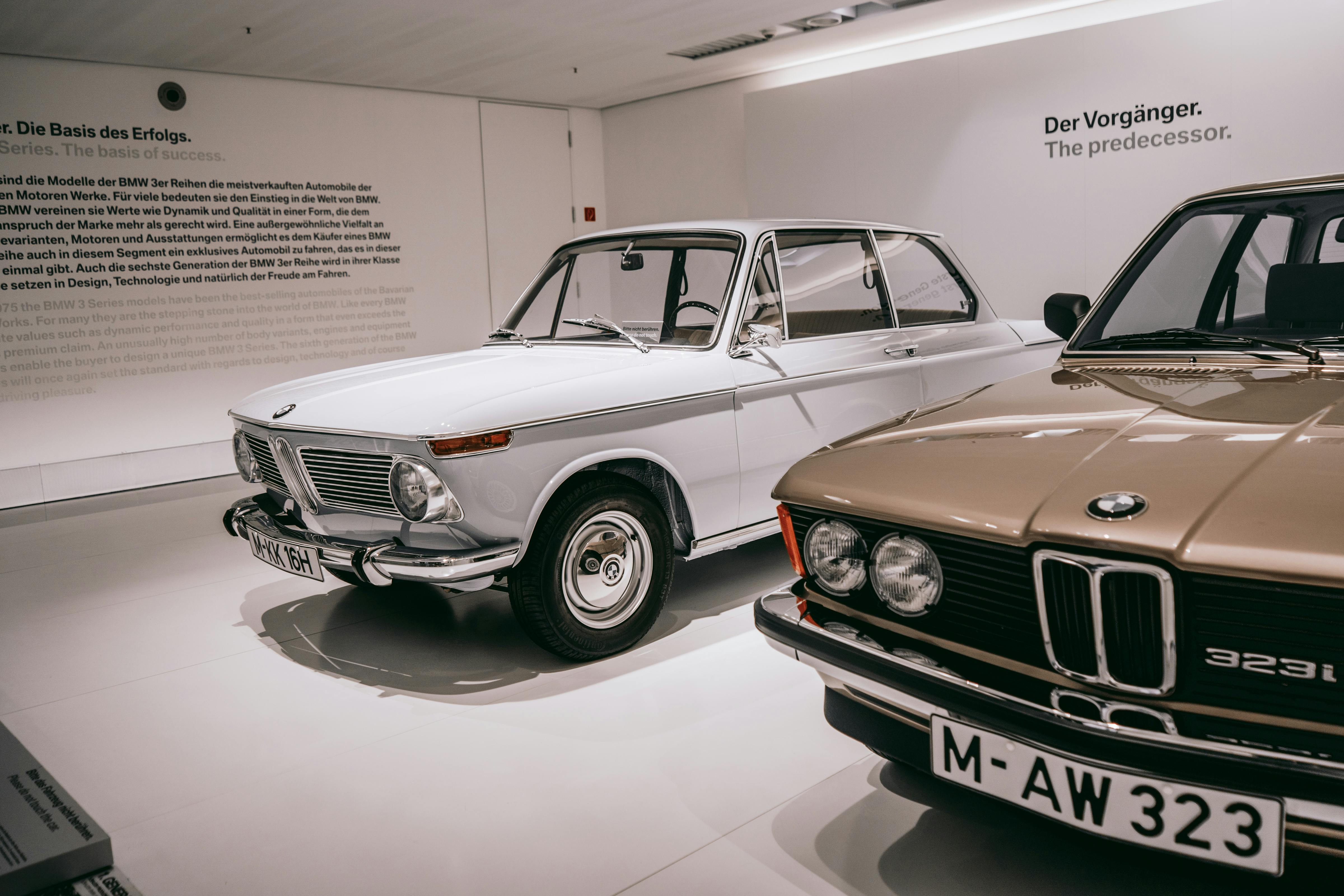
On day 2, you must visit the BMW Museum. It is a must-visit for car lovers – or anyone that is curious about automotive history and technology. It showcases the evolution of BMW Group vehicles and innovations. The BMW Campus is divided into two sections: the Museum and the Welt. The museum is dedicated to the history, design, and engineering of BMW automobiles, motorcycles, and engines. Across the museum, the Welt is a free-admission showcase with new BMW, MINI, and Rolls-Royce models.
If you’re lucky enough to book advance tickets, there is also the BMW Factory Tour, which is a guided behind-the-scenes tour of the BMW Group’s main automobile production plant in Munich. You can see real production live, from stamping and welding to painting and final assembly.
Day 3:
On day 3, take a trip outside of Munich to the famous Neuschawastein Castle. Schloss Neuschwanstein is a 19th-century palace in Bavaria that looks like it came straight out of a storybook. It was commissioned in 1869 by King Ludwig II of Bavaria, who was a big fan of medieval knights and their stories. Neuschawastein famously inspired Walt Disney’s vision of the Sleeping Beauty / Cinderella castles.
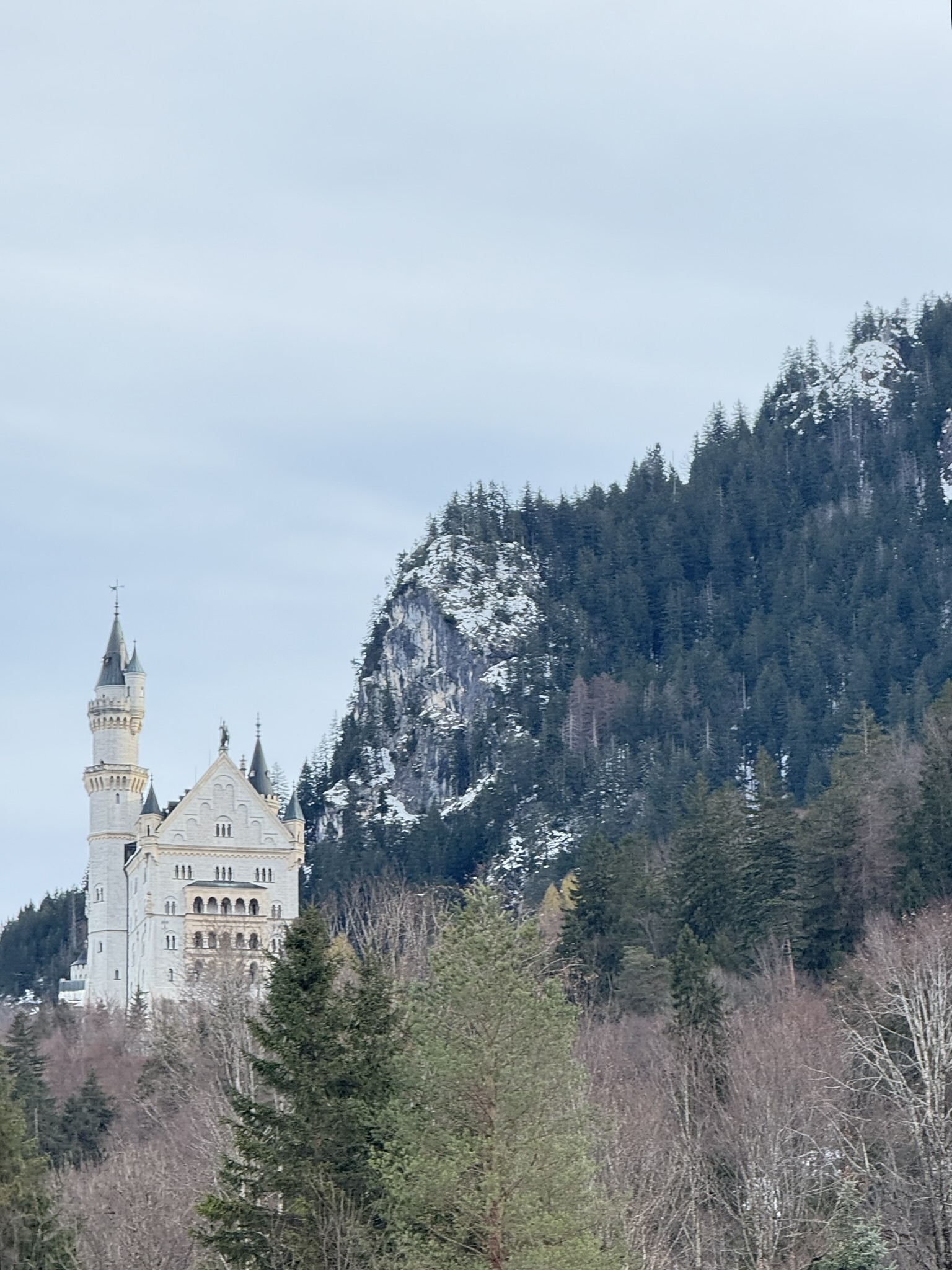
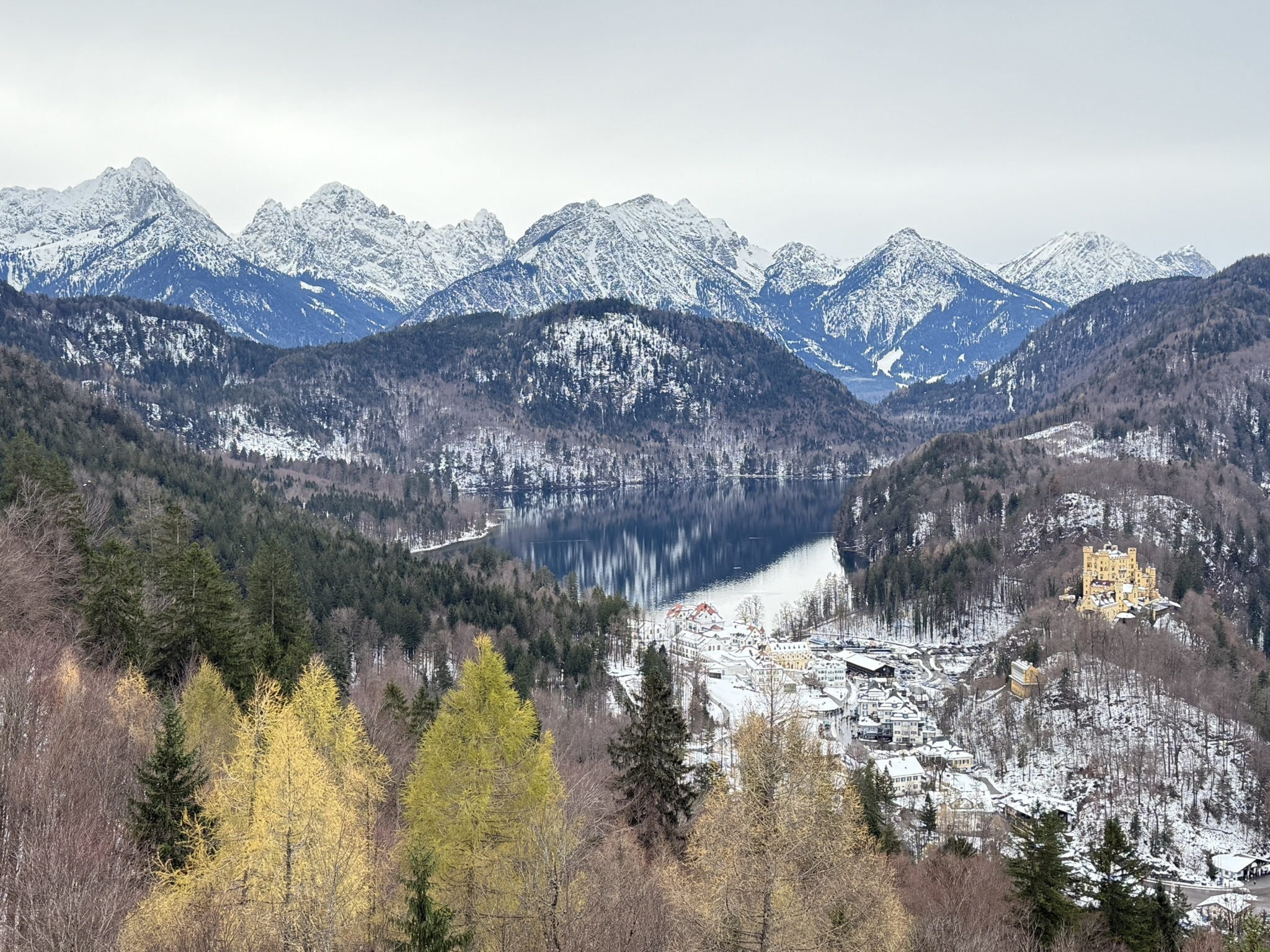
You can only visit the inside of the castle on a guided tour (about 35–30 minutes). The guided tours are timed to start roughly every 15 minutes. Photography inside the castle is not allowed on tours.The best way to reach the castle is either by train or car ride to Füssen and then a bus or taxi to Hohenschwangau. From Hohenschwangau, you can walk uphill for about 30–45 minutes or ride a horse-drawn carriage to a spot that is near the castle.
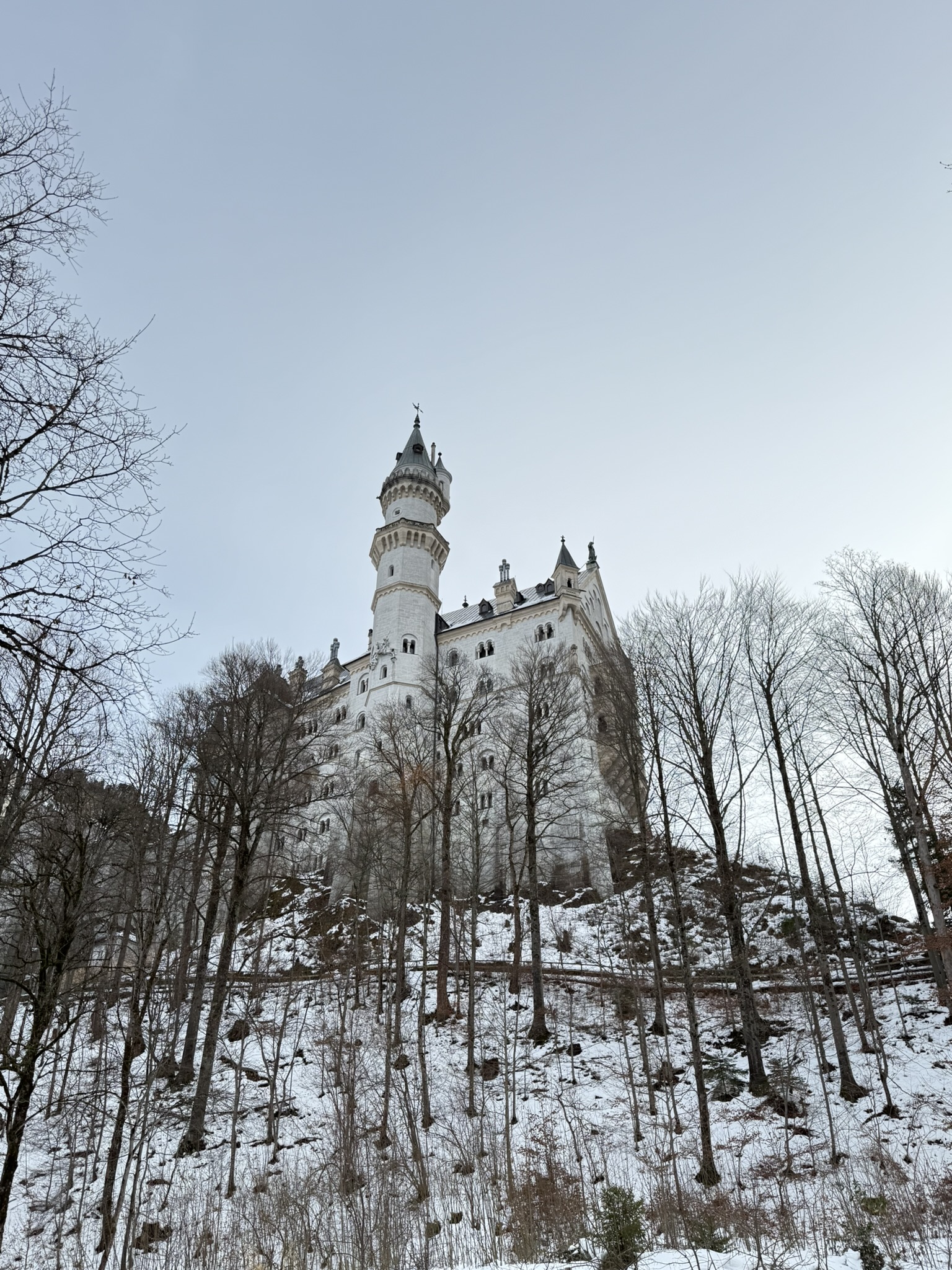
The best view of the castle is probably from Marienbrücke, a cliffside bridge with a full outside view of the castle. However, during the winter months and when it is snowing, you cannot access the bridge due to weather conditions.
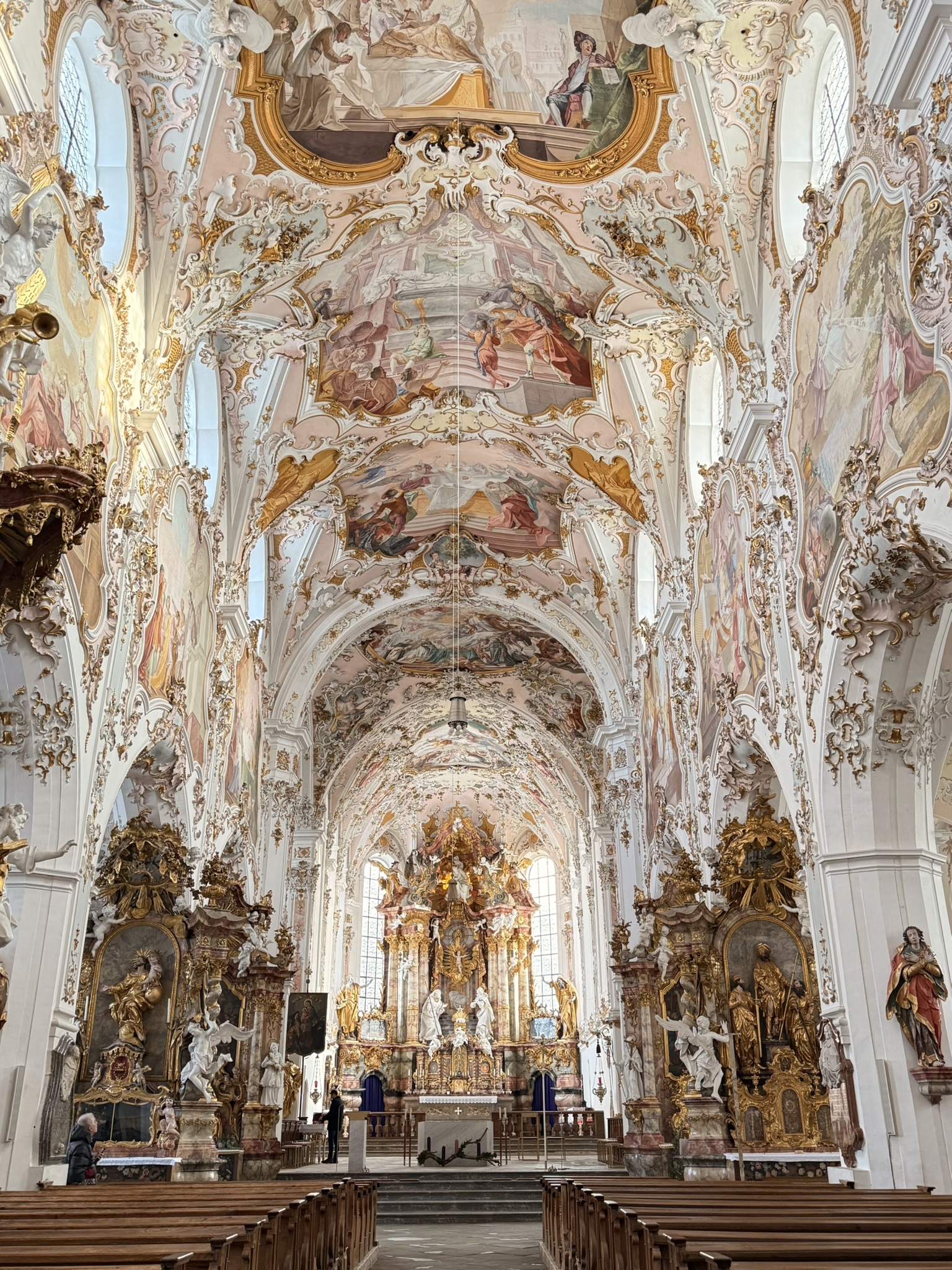
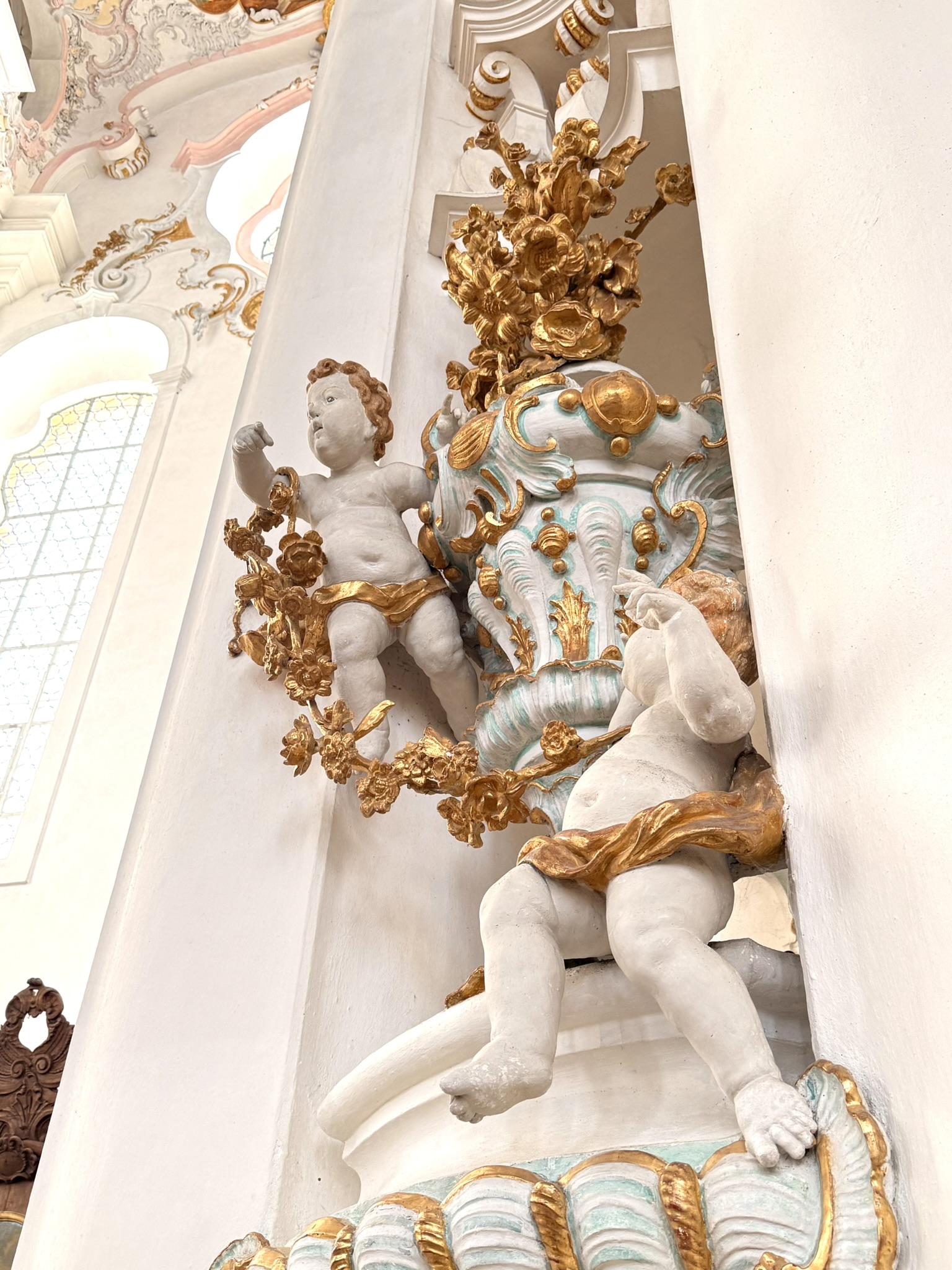
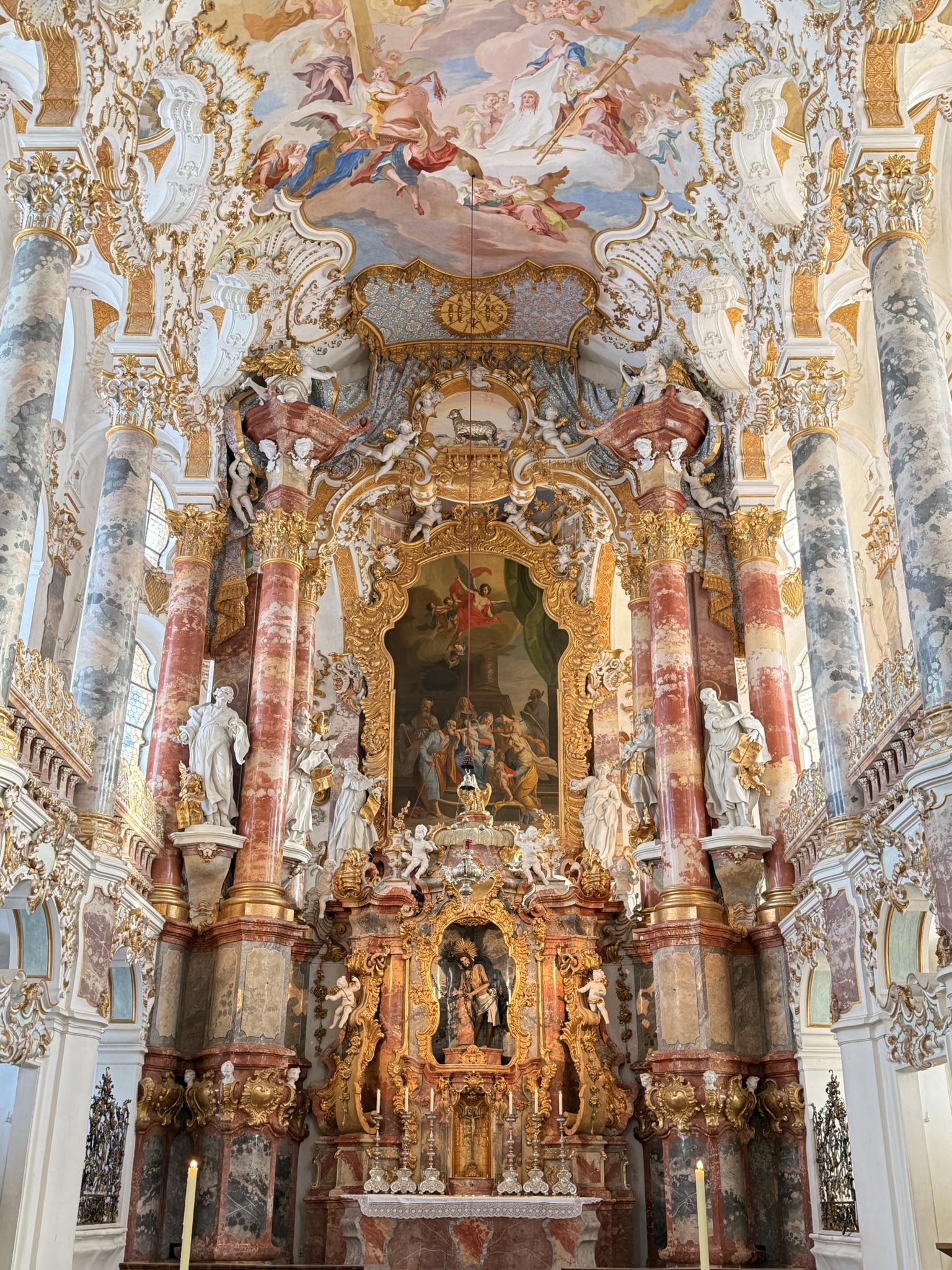
If you’re renting a car and going to Neuschawastein yourself, I highly recommend stopping along the way at the church in Rottenbuch as well as the Pilgrimage Church of Wies (Wieskirche), a church known for its sweeping rococo style. We made brief stops at both of these churches and they were absolutely beautiful.