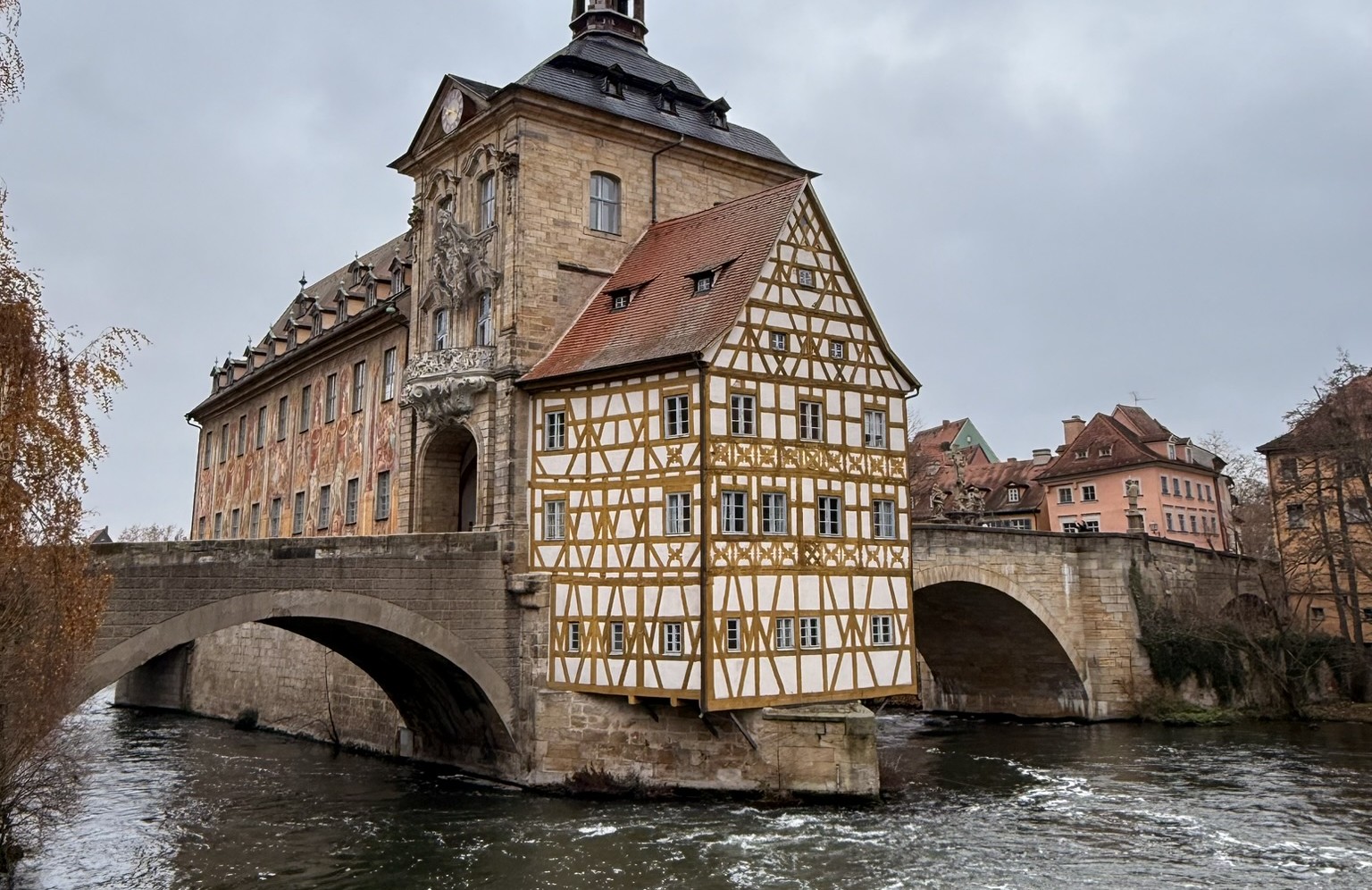
Located in Bavaria, Germany, Bamberg is a UNESCO World Heritage site, famous for its medieval architecture and beer culture. The Old Town (Altstadt) was granted the status of UNESCO World Heritage because it is one of the largest intact medieval city centers in Europe, with a rich mix of Romanesque, Gothic, and Baroque architecture. Throughout the Middle Ages and early modern era, Bamberg influenced much of the architecture and arts across Central Europe. In the 18th century, it was a hub of the Enlightenment.
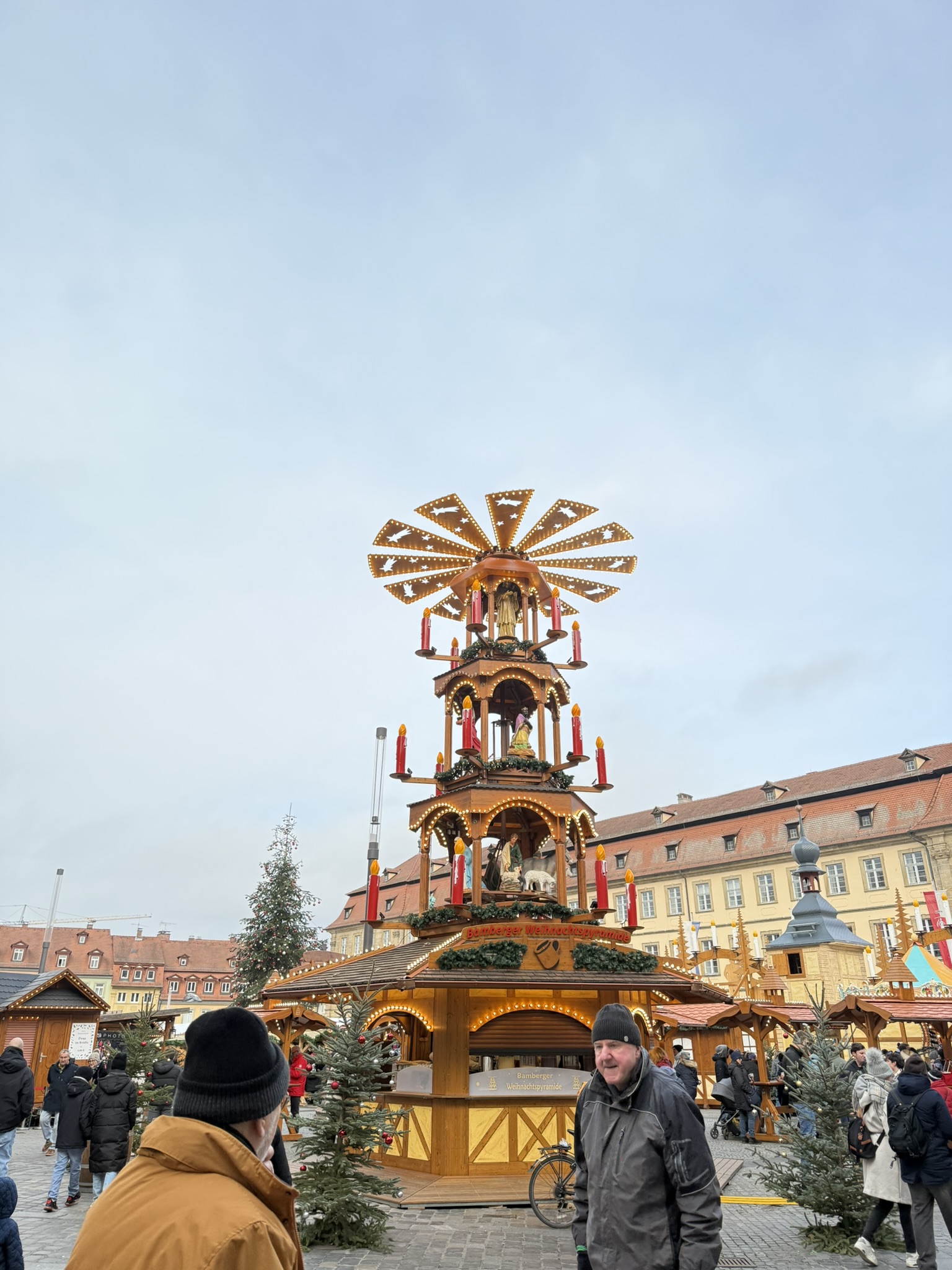
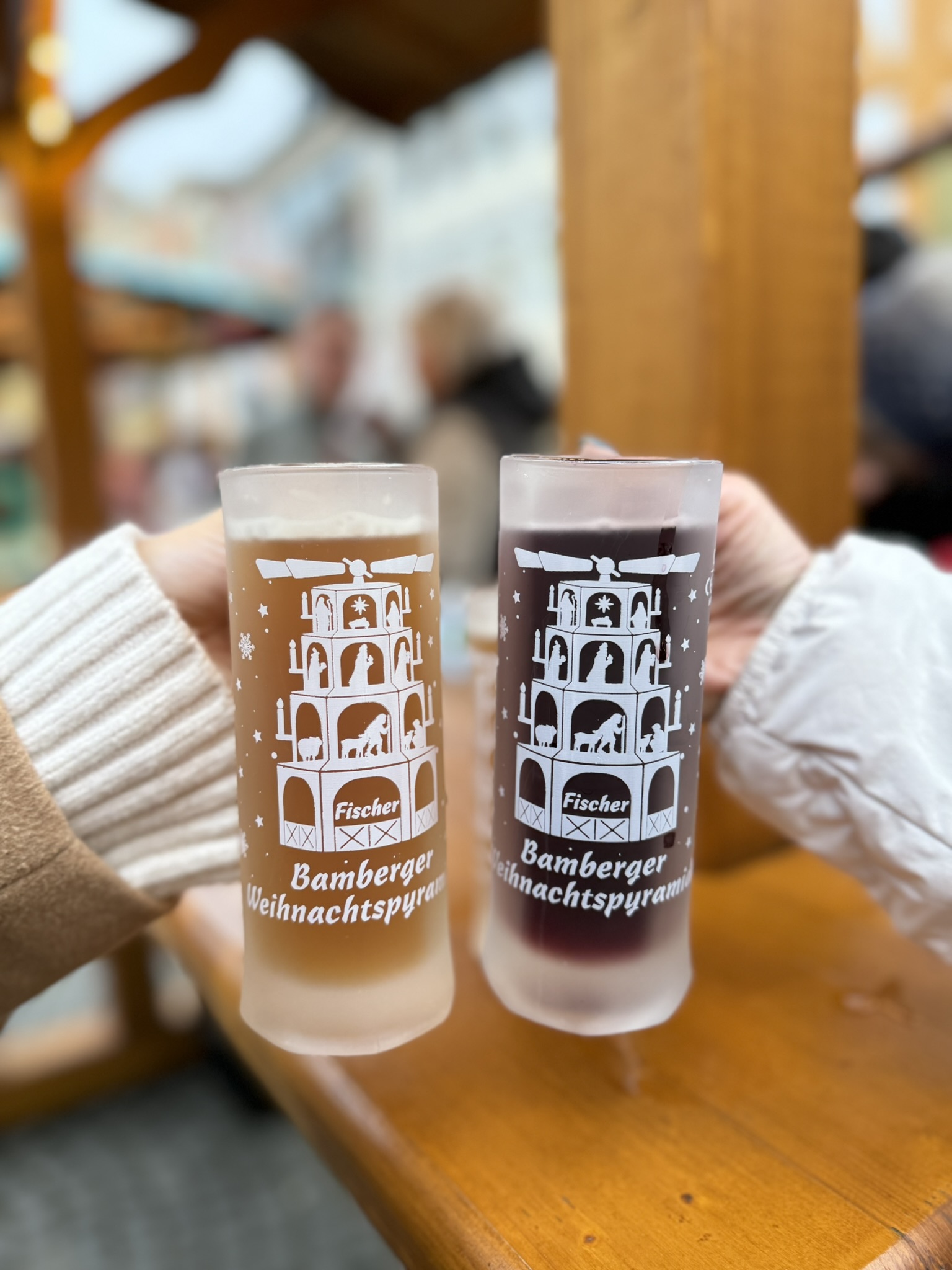
Bamberg is located about 1 hour and 45 minutes from Munich, making it the perfect day trip if you’re looking for a historic Bavarian city to visit. From Bamberg train station, your first stop, if you’re visiting from late November through December, will be the Bamberg Christkindlmarkt (Bamberg Christmas Market). Located in Maximiliansplatz, Bamberg’s city center, it has a strong focus on Franconian traditions, making it feel more local and intimate. To me, it felt more like a town celebration than a tourist attraction. We had some delicious salmon as well as the best cheesy Spätzle that I had during our entire trip.


After visiting the Christkindlmarkt, your next stop will be Bamberger Altstadt, or Bamberg Old Town. Inscribed in 1993 as a UNESCO World Heritage site, it is recognized for its intact medieval layout, historic buildings, and continuous urban life. Unlike many other old towns in Germany, Bamberg’s Old Town was never destroyed by war, so the original structure has survived.
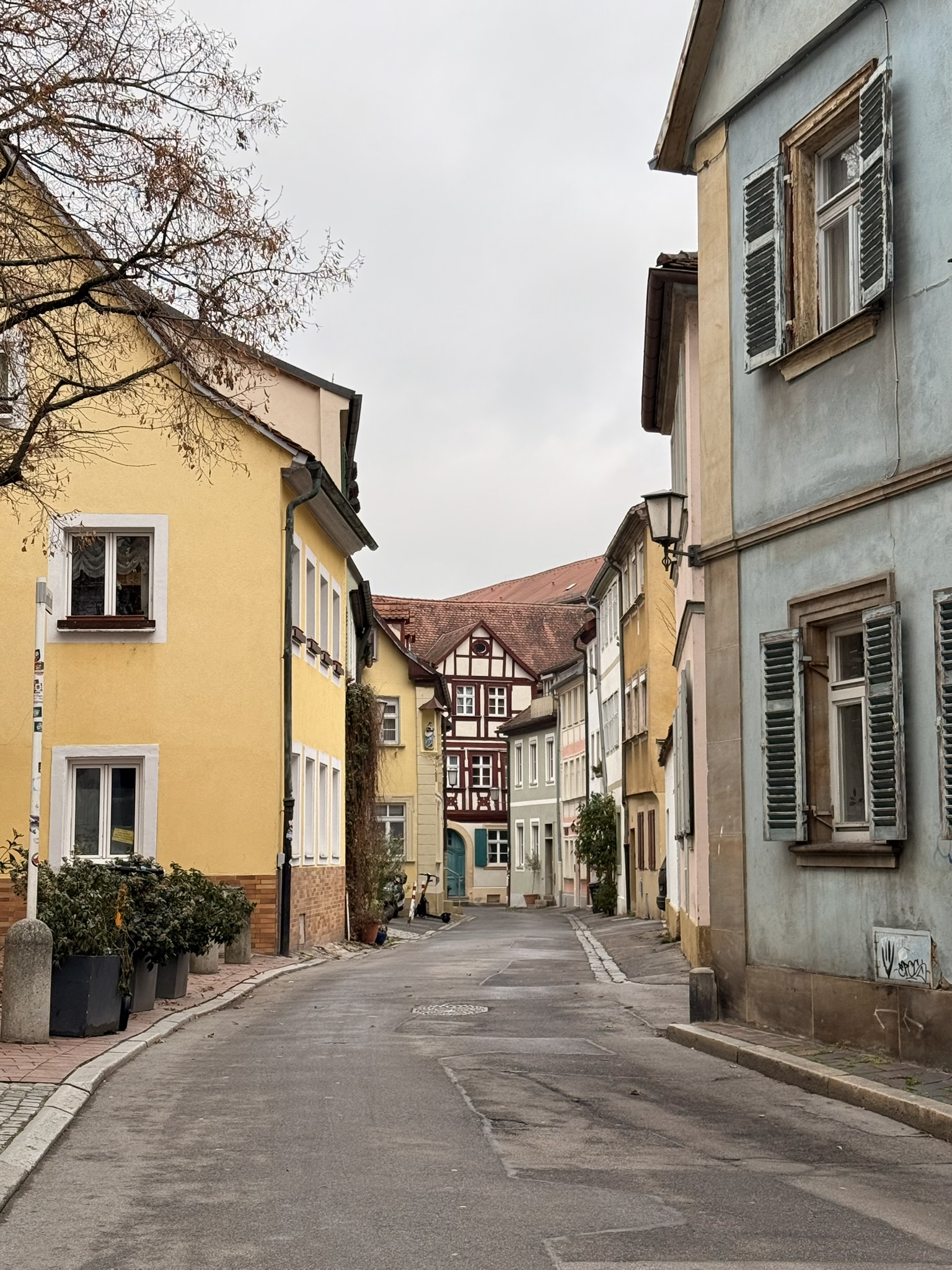
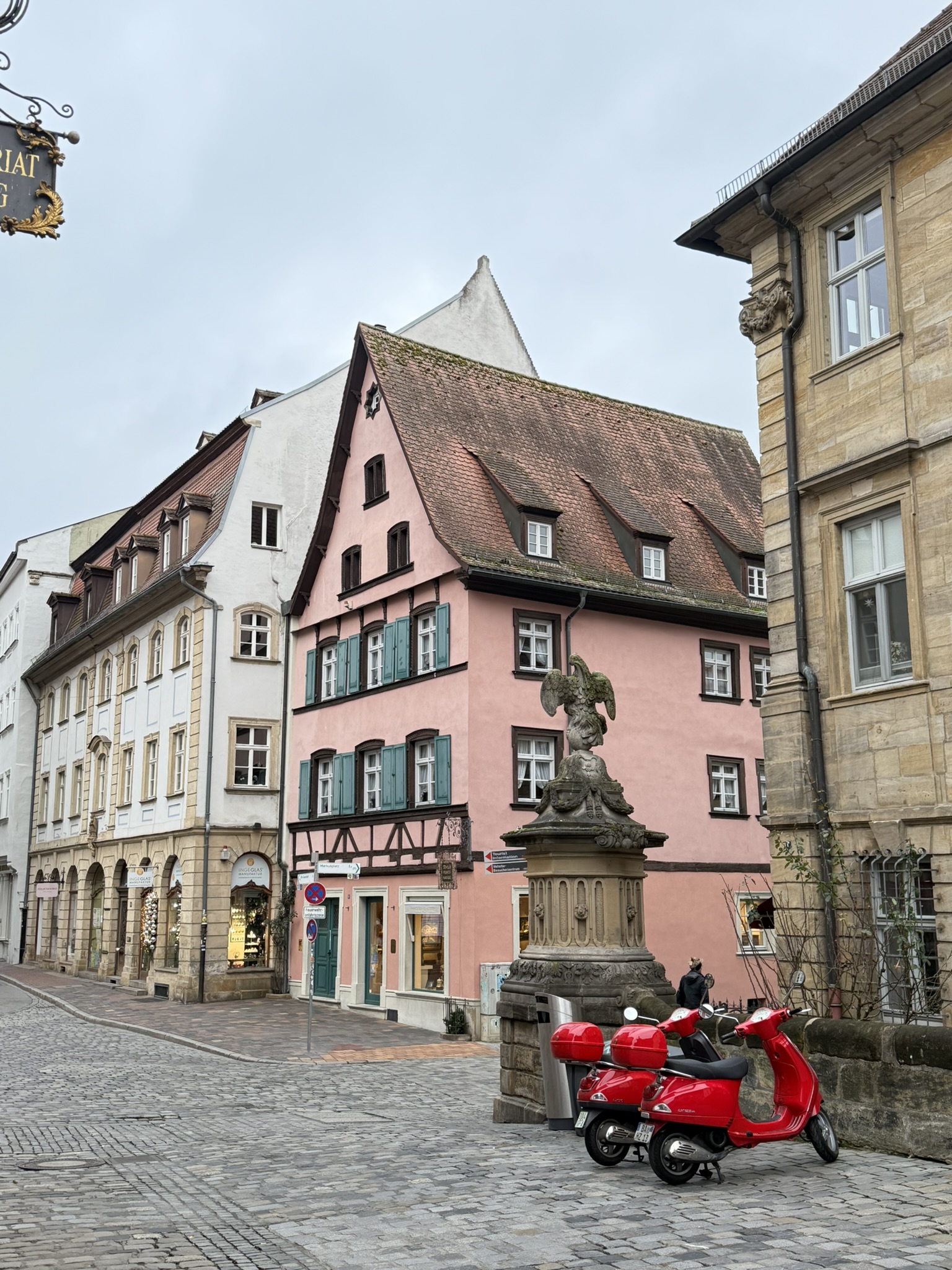
The Altstadt is traditionally divided into three historic areas:
- Bergstadt (Hill Town), which includes Bamberg Cathedral (Dom), the Old Court (Alte Hofhaltung), and the New Residence (Neue Residenz) and Rose Garden
- Inselstadt (Island Town), which is located between branches of the Regnitz River and is home to the iconic Old Town Hall (Altes Rathaus)
- Gärtnerstadt (Gardener’s Town), which is a historic district where urban farming existed inside city walls
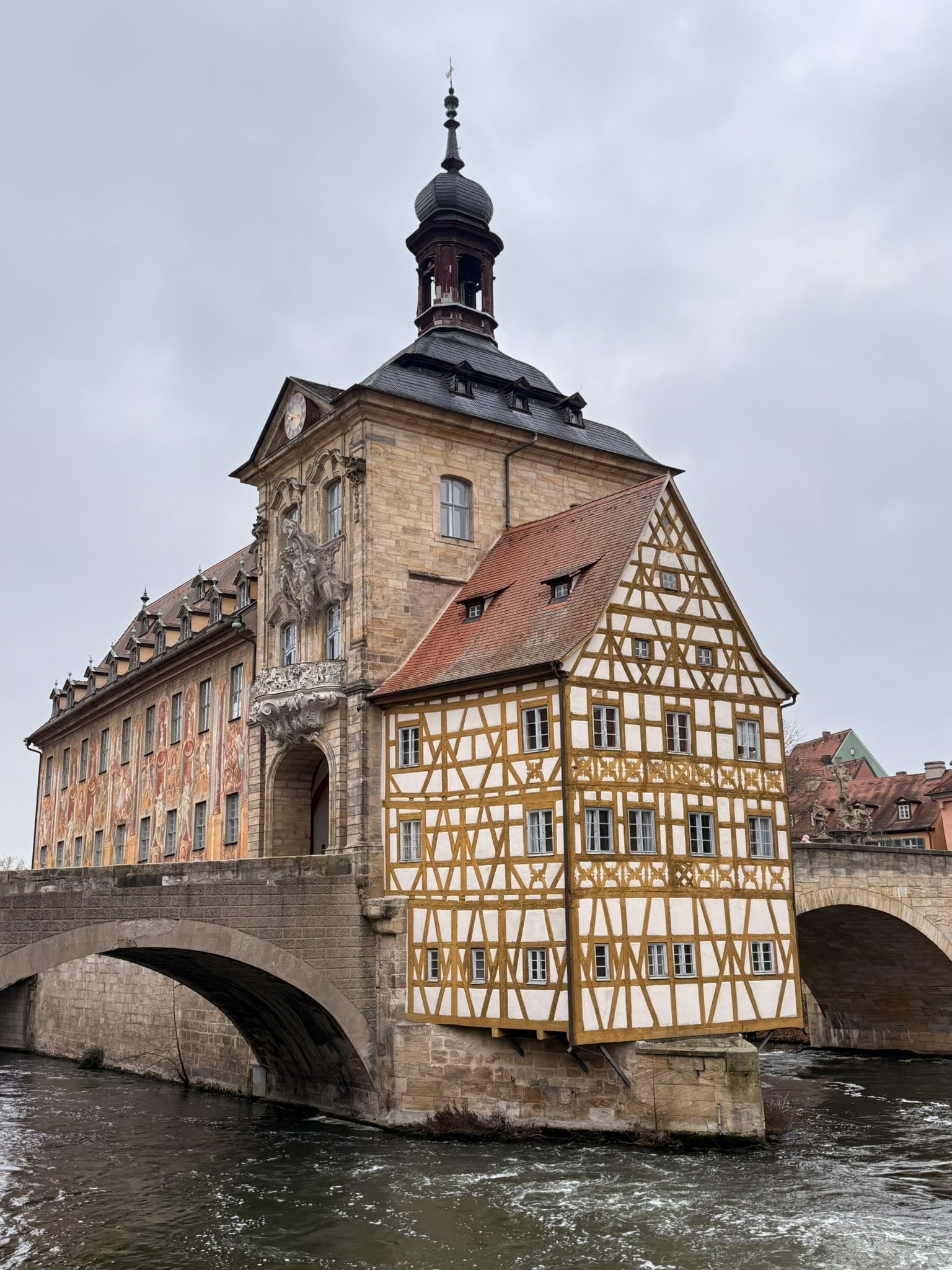
Located in the Old town is the Old Town Hall (Altes Rathaus), which is built on a tiny, artificial island in the Regnitz River and connected to the town by two bridges. One of the most iconic tourist spots in Bamberg, it is instantly recognizable because it stands in the middle of the river. According to legend, the bishop refused to give the townspeople land for a town hall, so they built one in the river instead! You can get the best view of Altes Rathaus from the Geyerswörthsteg Bridge. The building is no longer functional as the town hall, but now houses the Ludwig Collection, featuring a collection of porcelain and faience from Europe and Asia.
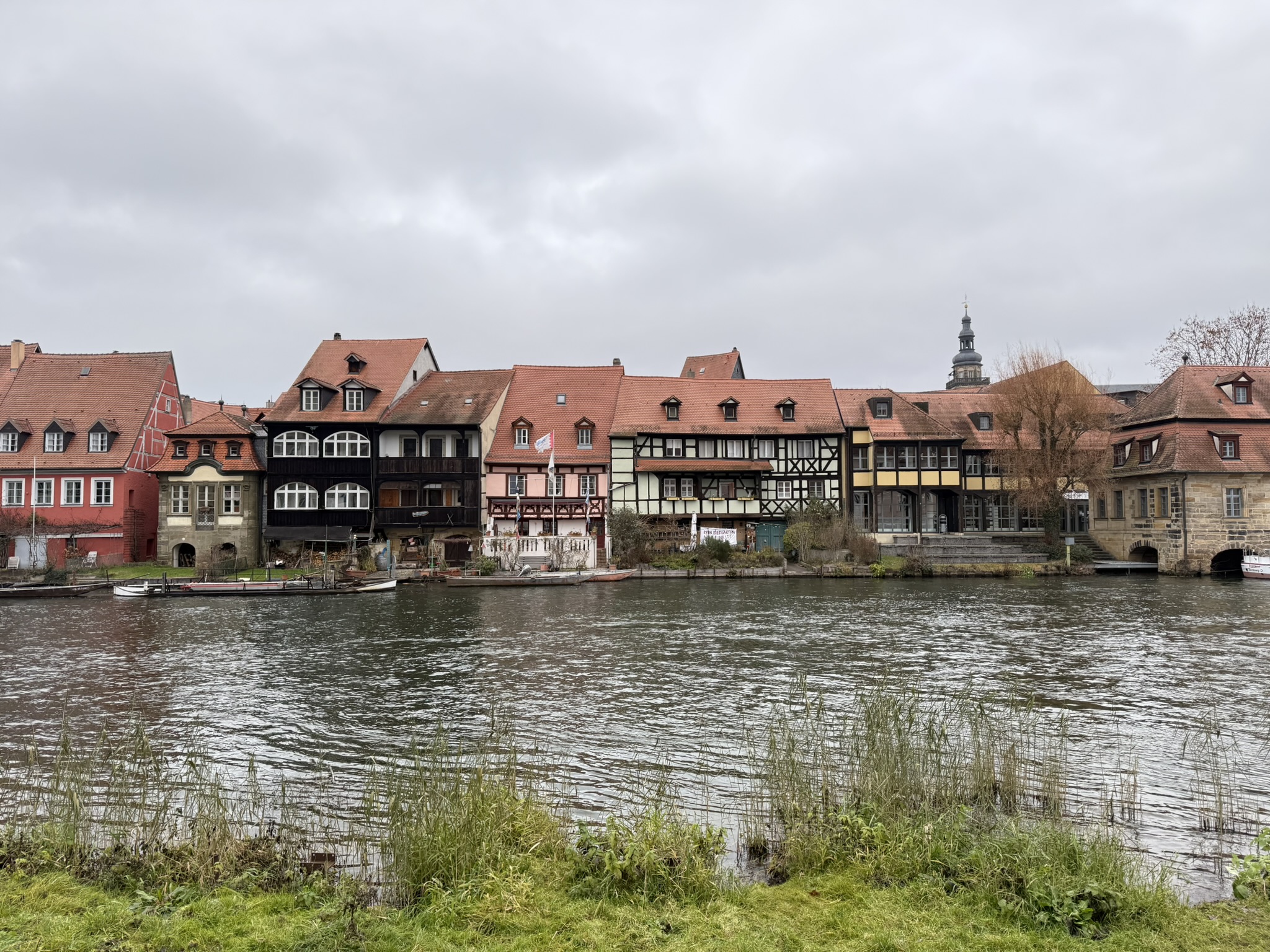
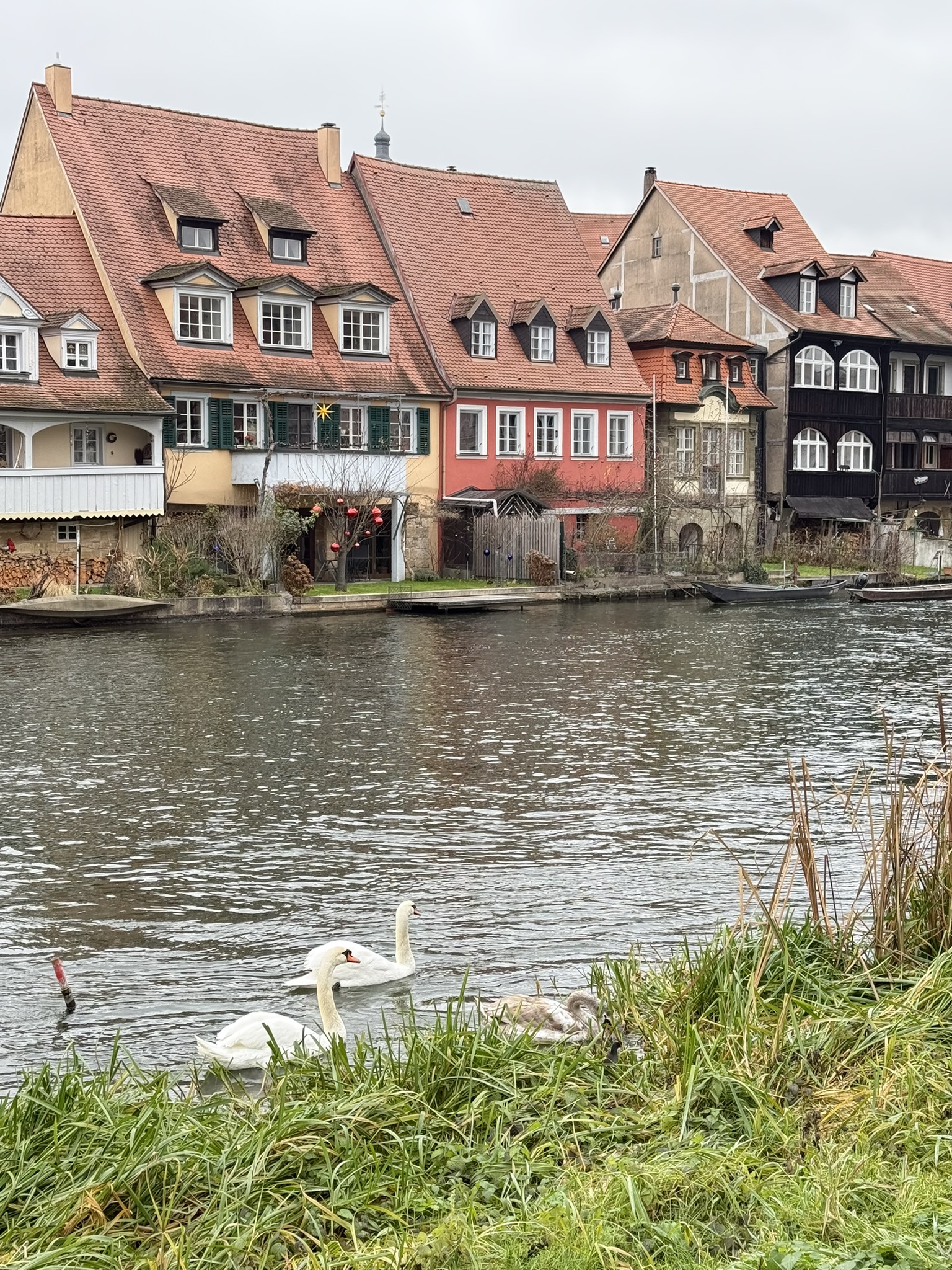
After taking some photos of the Old Town Hall, head over to the Klein Venedig Viewpoint, which is a great spot to walk around if you have the time for a stroll. It offers the classic postcard views of Bamberg’s historic fishermen’s houses that line the Regnitz River. The former fishermen’s houses date back to the 17th century, but people still live there, which gives the area a peaceful, lived-in feel, especially in the early morning or evening.
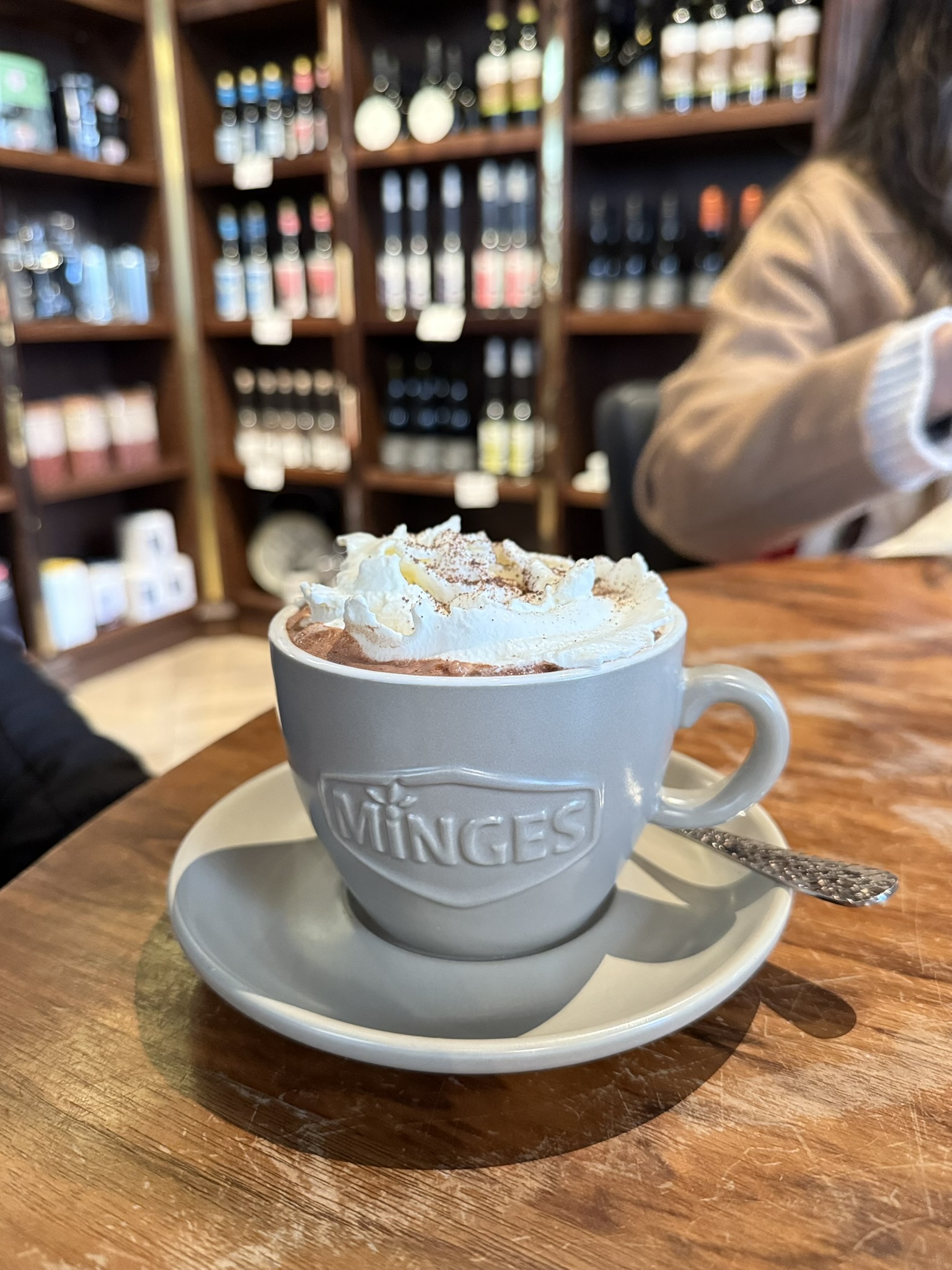
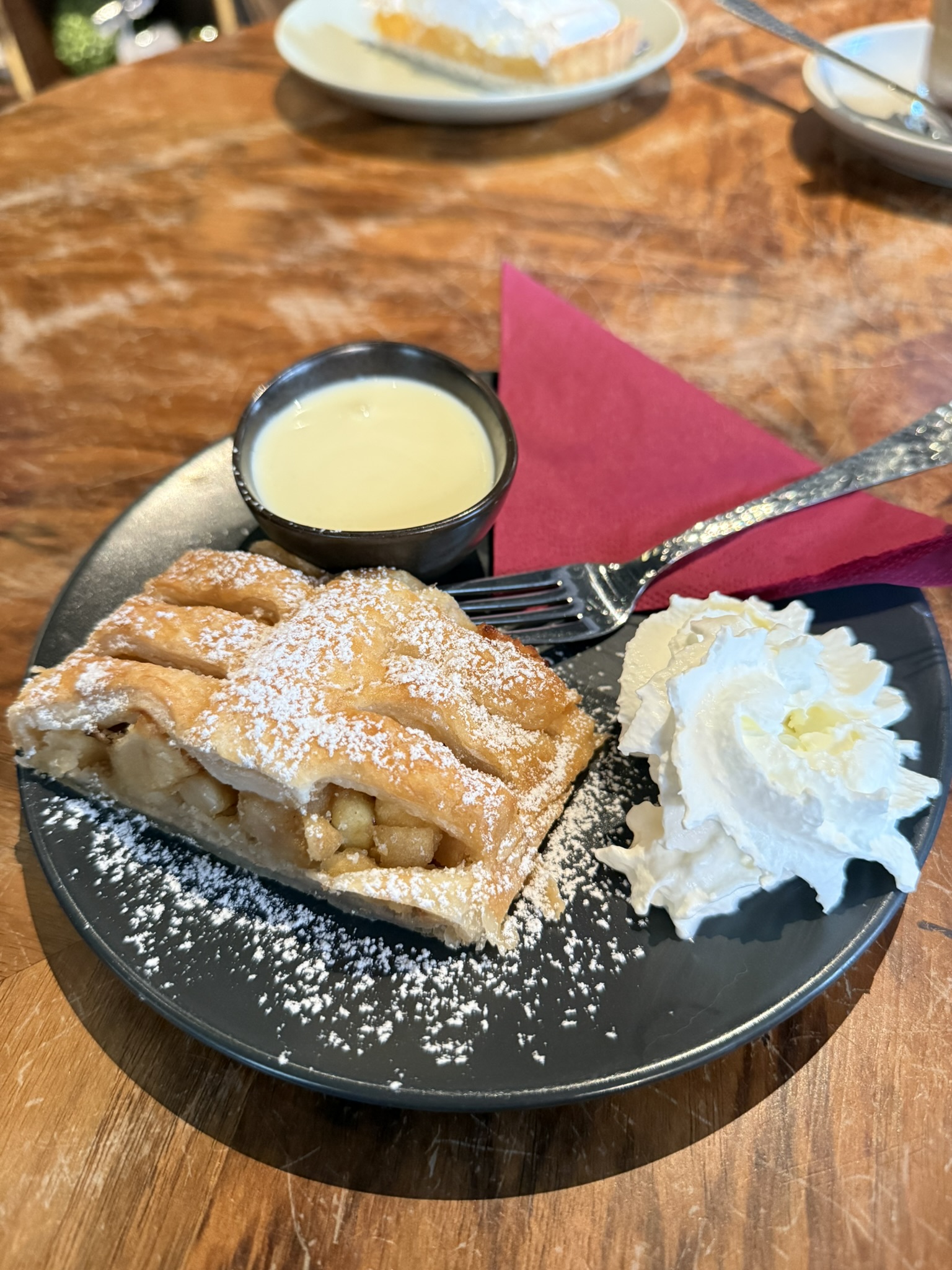
It’s now time for a coffee break! Minges Cafe is a coffee spot in the heart of Bamberg’s Old Town, perfect for coffee lovers and relaxing breaks. It is a local favorite and it showed because during our time there, it was mostly full.
If you’re feeling up to a walk uphill, Bamberger Dom (Bamberg Cathedral) sits on top of the Domberg (Cathedral Hill), overlooking the Old Town. Founded in 1004 by Emperor Henry II, it symbolized Bamberg’s importance as a religious and political center in medieval Germany. Its four massive towers dominate the skyline and the inside three-nave basilica offers beautiful, high-vaulted ceilings. The Cathedral is free for most areas, but special exhibitions may require a ticket.
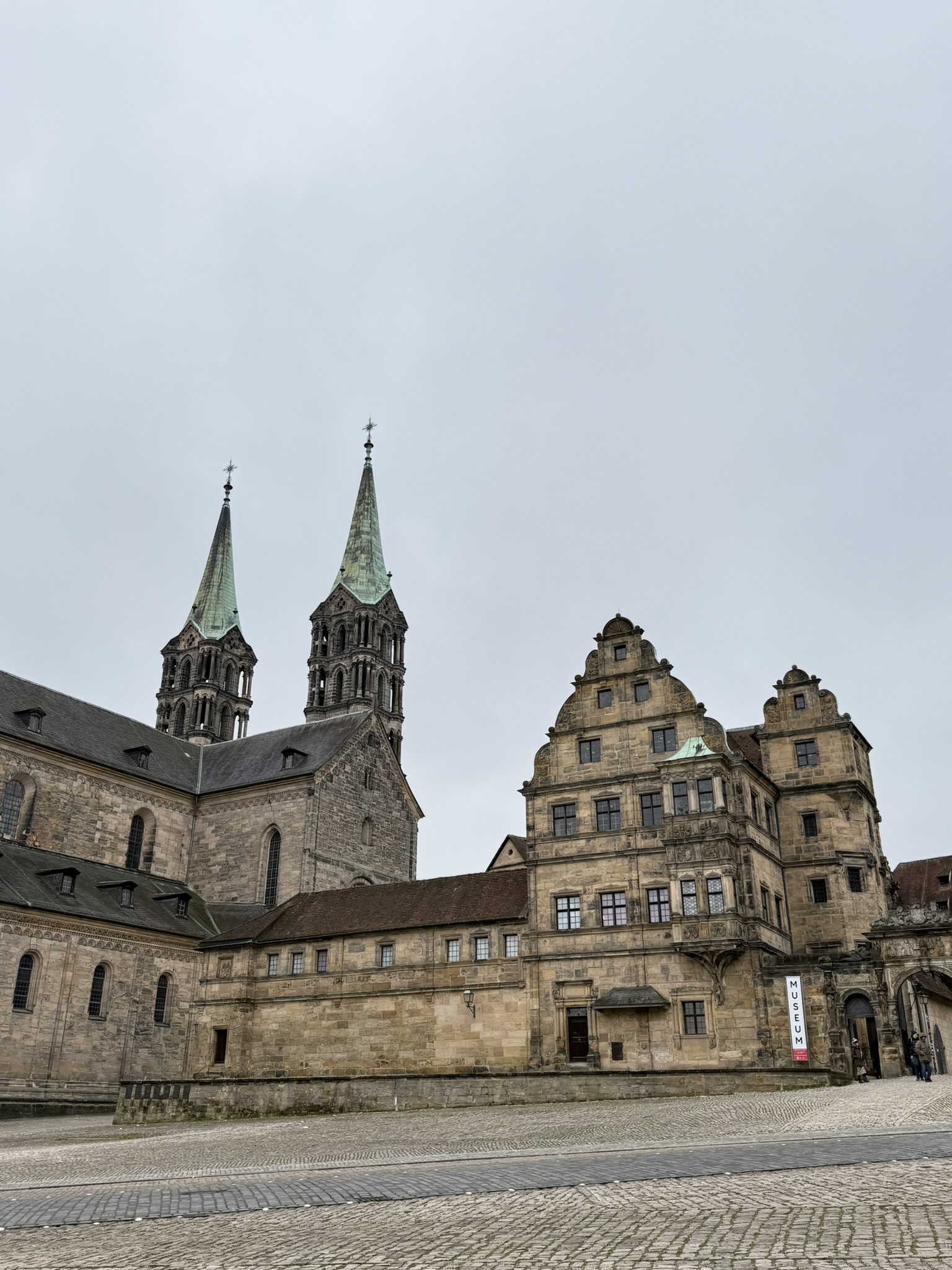
Located right next to the Bamberg Cathedral is Alte Hofhaltung (Old Court), one of Bamberg’s most historic complexes. It was the residential and administrative center of the bishops of Bamberg for centuries. Founded in the 11th to 12th century as part of the cathedral complex, it currently houses the Bamberg Historical Museum, which features exhibits on bishopric history, medieval artifacts, governance in the Holy Roman Empire.
Before you head back to the train station for your train back, meander through Bamberg Christkindlmarkt one more time for the night time vibes.

