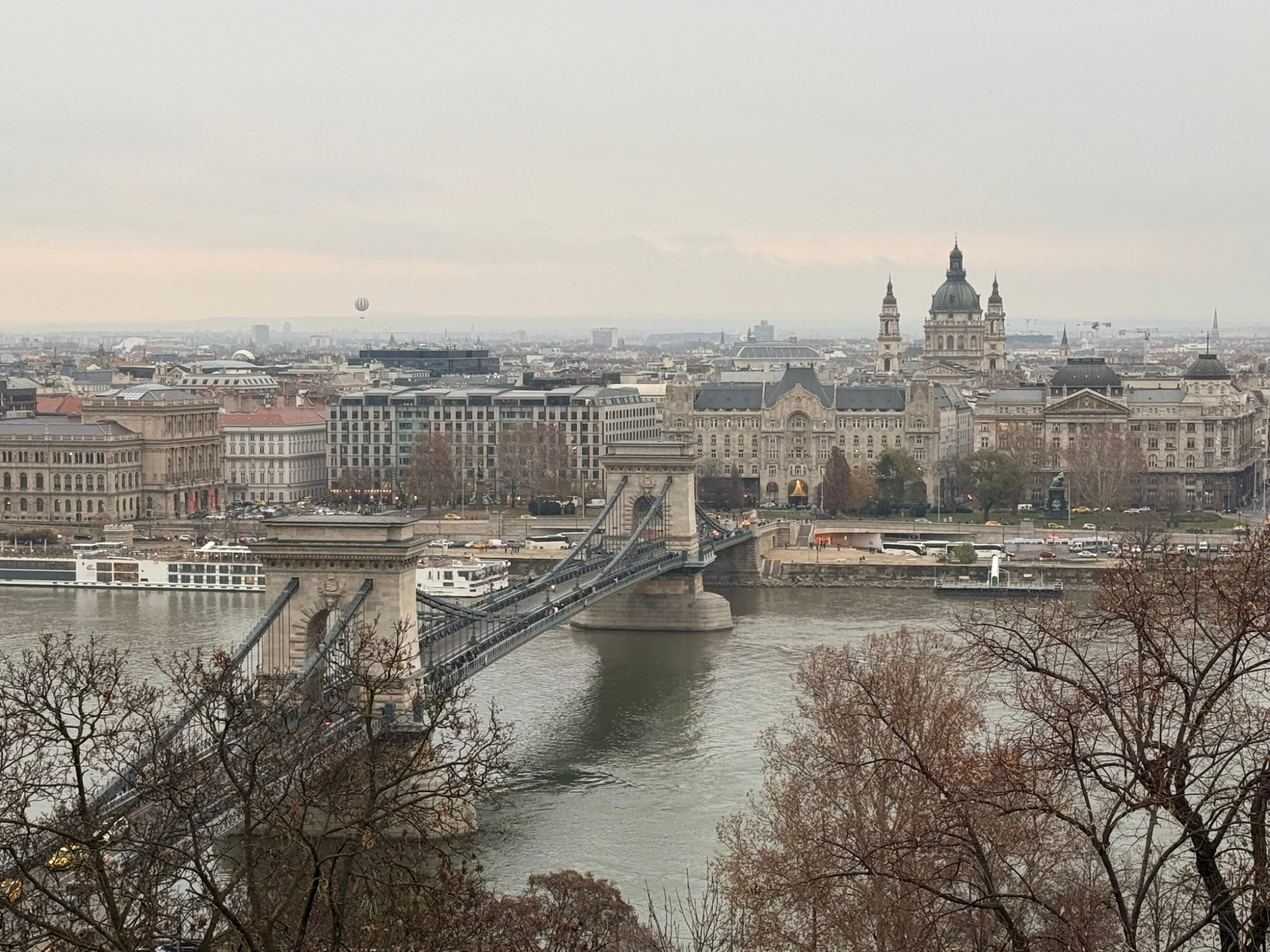
Divided into two parts, Buda (hills) and Pest (flat downtown) by the Danube, Budapest is the beautiful capital of Hungary. The original city was founded around the 1st century AD, by Romans and named Aquincum on the site of modern Buda. Aquincum became a major military and civilian city during the Roman occupation. After the Roman Empire fell, the area was ruled by various peoples, including the Huns, Avars, and Magyars. From 1541–1686, much of Budapest was under Ottoman rule, which introduced Turkish architecture and baths to the city.
After the Ottomans, the Habsburgs ruled the city for about 250 years, rebuilding Buda and Pest in a Baroque style. Hungary was part of the Austro-Hungarian Empire from 1867–1918, with Budapest as a major city. After 1989, Hungary transitioned from communism to democracy, where it stands today.
When visiting Budapest, it’s important to plan your days around which part of the city you’d like to be in – Buda or Pest. We opted to stay in Pest, in Hilton Garden Inn Budapest City Centre, because of its walkability to major attractions in Pest. We actually ended up walking to the attractions on the Buda side as well!
Day 1:
Start your day with a cup of coffee at % Arabica Budapest Kiraly and walk around the city center on the Pest side. The Hungarian State Opera is absolutely gorgeous to look at and there are also several hotels in the area that have beautiful facades.
Have lunch at Menza Étterem és Kávéház, one of Budapest’s most popular café‑restaurants, loved for its retro vibe, hearty food. This is our first meal in Budapest and it did not disappoint. I had my first Hungarian Gulyás with dumplings as well as an amazing chicken liver mousse.


After lunch, meander over to Váci Street (Váci utca), a famous shopping street and pedestrian zone in Downtown Budapest, near the Danube River. The street is lined with beautiful historic buildings, giving it a classic Budapest feel. It is a great place to try Hungarian street food like kürtőskalács (chimney cake) and do some souvenir shopping.
Parallel to Váci Street is the Duna‑Korzó Promenade. Also called the Danube Promenade (Dunakorzó in Hungarian), it is one of Budapest’s most beautiful riverside walks. It features breathtaking views of the river and the skyline, including the Buda Castle, Gellért Hill, and the bridges.

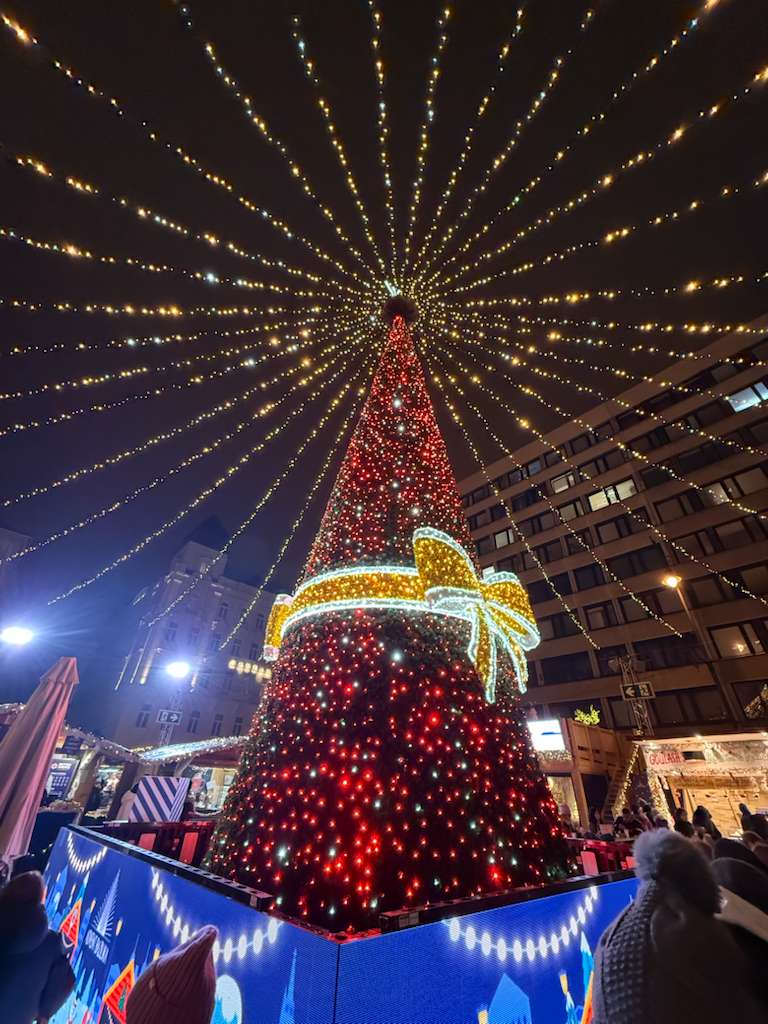
If you’re in Budapest during the Christmas market season, make sure you visit the Vörösmarty Square Christmas Market. Vörösmarty Square Christmas Market (Vörösmarty téri Karácsonyi Vásár) is one of the most famous Christmas markets in Budapest. It is typically open from late November to December 24th. It is one of the oldest and most popular Christmas markets in Hungary. At the market, you can find traditional Hungarian handicrafts such as wooden toys, ornaments, and ceramics. You can also try traditional Hungarian foods like Lángos (fried dough with toppings) and Kürtőskalács (chimney cake).


Just a short walk away is St. Stephen’s Basilica (Szent István-bazilika), one of the most famous landmarks in Budapest. Named after Stephen I, the first King of Hungary, it is a Roman Catholic basilica. Built in Neoclassical style with later influences from Neo-Renaissance and Neo-Baroque styles, the Basilica survived World War II with minor damage and was then restored to what it stands today.
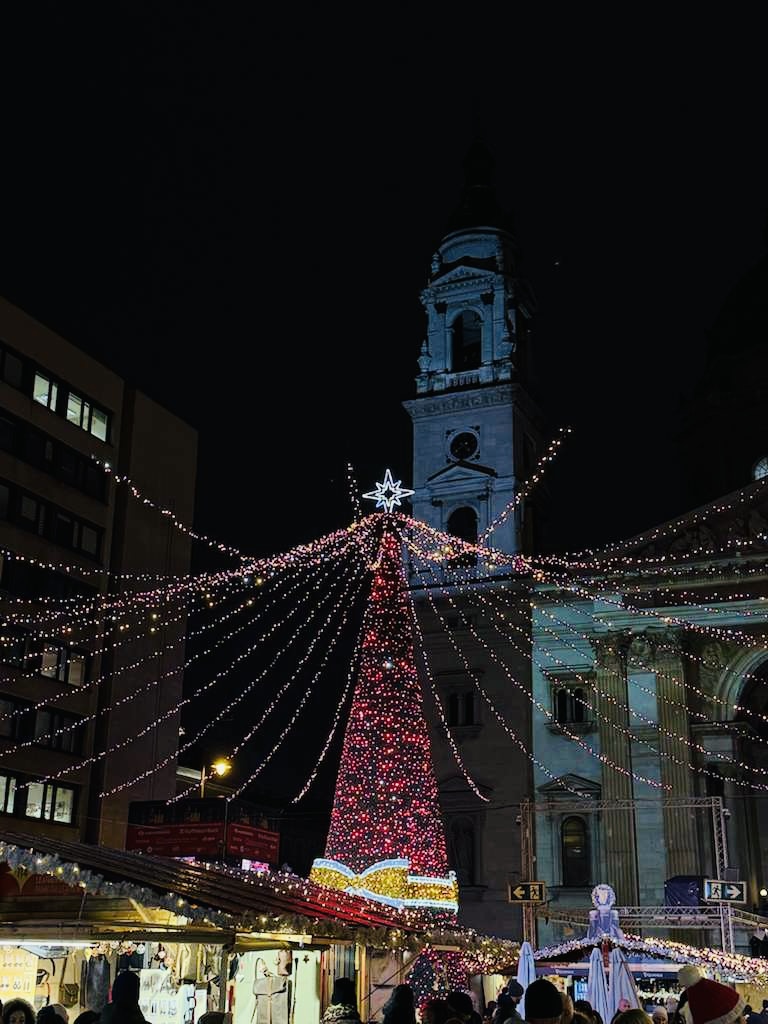
During Christmas market season, St. Stephen’s Basilica Christmas Market is located in front of St. Stephen’s Basilica on Szent István Square, the Christmas market is officially called the Advent Basilica Christmas Market. A festive Christmas market with wooden stalls selling handmade Hungarian crafts, gifts, and tasty seasonal food, it is typically open from mid-November to December 24th. Every night during the market, the façade of St. Stephen’s Basilica features a light show with 3D projections and colorful visuals. The show usually runs every 30 minutes after sunset, starting around 5:30 PM and running until 10:00 PM.


Day 2:
On our second day, we started the morning off with coffee and breakfast at 9Bar. It’s super cozy inside and if you’re a nerd like me, you’d love the interior.
Your first activity of the day will be a guided tour of the Hungarian Parliament Building (Országház). The Parliament Building is one of Budapest’s most iconic landmarks and a symbol of Hungary. On the Pest side of the Danube River, construction took place between 1885–1904 in Neo-Gothic style, with influences of Renaissance and Baroque. Standing at about 96 meters, it is the same height as St. Stephen’s Basilica, due to rules stating the church and government are equal. The only way to visit the inside of the Parliament Building is through a timed guided tour, which can be booked online.


The Parliament Building is beautifully lit at night, reflecting in the Danube. Your best bet for the best view is either from a Danube River Tour, the Széchenyi Chain Bridge, or high from Buda Castle.

After the Parliament Tour, dip up to Szaletly for a leisurely lunch. Szaletly is a neighborhood restaurant in the Zugló district (Stefánia út), just outside the busiest tourist areas. The restaurant focuses on seasonal Hungarian food made with fresh, quality ingredients. Their menu is built upon three main pillars: tradition, innovation, and local values. They are inspired by the rich heritage of Hungarian hospitality, modern gastronomy, and using ingredients from local Hungarian producers. We opted for their five-course tasting menu, which features an appetizer, soup, two entrees, and a dessert.


After a relaxing lunch, head back over to the Duna‑Korzó Promenade to meet for your Danube River Tour. This is a staple activity when you visit Budapest. We opted for a night tour, because I really wanted to see the Parliament Building lit up at night. The tour that we picked came with a beverage and a guided commentary on Budapest. We ended up learning a lot during this tour about the history of Budapest.

Finish the night with dinner at Gettó Gulyás, a popular Hungarian restaurant in Budapest’s former Jewish Quarter. It is a traditional Hungarian eatery specializing in goulash (gulyás), pörkölt (stews), paprikash, and other classic dishes. The Chicken Paprikash was flavorful, creamy, and very tender. We also tried their beef tartare, which was paired with pickles, mustard, and sun-dried tomatoes. The food was very good, and a great spot to eat after exploring the former Jewish Quarter.


